


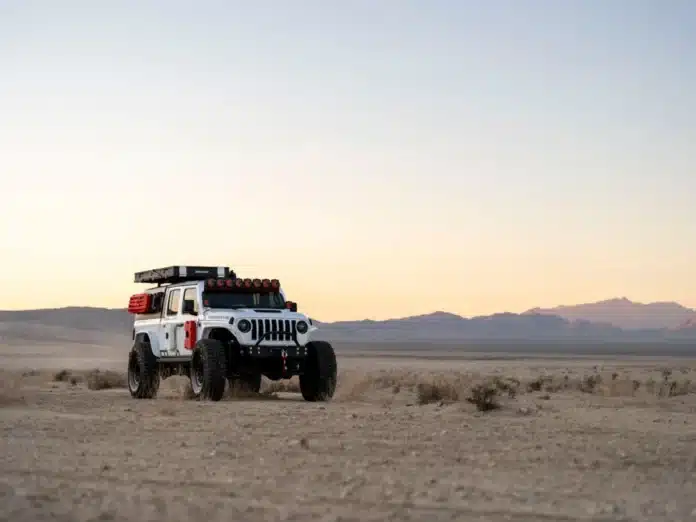

Every few weeks, the same question pops up on r/overlanding: will a fiberglass shell hold a rooftop tent? The answers range from “mine’s been fine for years” to “mine cracked on the first washboard road.” Both camps are telling the truth, because truck caps vary wildly. Some carry barely 220 pounds while moving. Others handle more than three times as much. If you guess wrong, you’re looking at a cracked roof, a leaking cap, or a tent sliding off at highway speed.
I’ve spent more than 15 years overlanding around the U.S., and I’ve watched plenty of rigs get loaded past what they were built to carry. Building out my own truck has made me obsessive about where every pound sits. So this guide breaks down what cap weight ratings mean, how the popular brands compare, and how to run the truck payload math nobody likes doing. Read it before you bolt anything to your roof.
Quick Facts:
- Topic: Mounting a rooftop tent on truck cap roofs safely
- Key rating: Dynamic weight rating (load while driving)
- Second rating: Static weight rating (load while parked)
- Typical caps: 220 to 330 lb dynamic
- Venturous Ozark: 750 lb dynamic, 1,500 lb static
- Hidden limit: Your truck’s payload rating
- Handling factor: Higher center of gravity on roof loads
- Best for: Truck owners planning a cap-mounted tent build
8 min read
In This Guide
- Can a Truck Cap Hold a Rooftop Tent?
- Truck Cap Weight Ratings Compared
- Static vs. Dynamic Weight Rating Explained
- Truck Payload Math for a Rooftop Tent on Truck Cap Build
- How Roof Weight Changes Handling
- Why Fiberglass Truck Cap Construction Matters
- Venturous Ozark vs. Standard Fiberglass Caps
- Final Verdict on a Rooftop Tent on Truck Cap Setup
- FAQ
Can a Truck Cap Hold a Rooftop Tent?
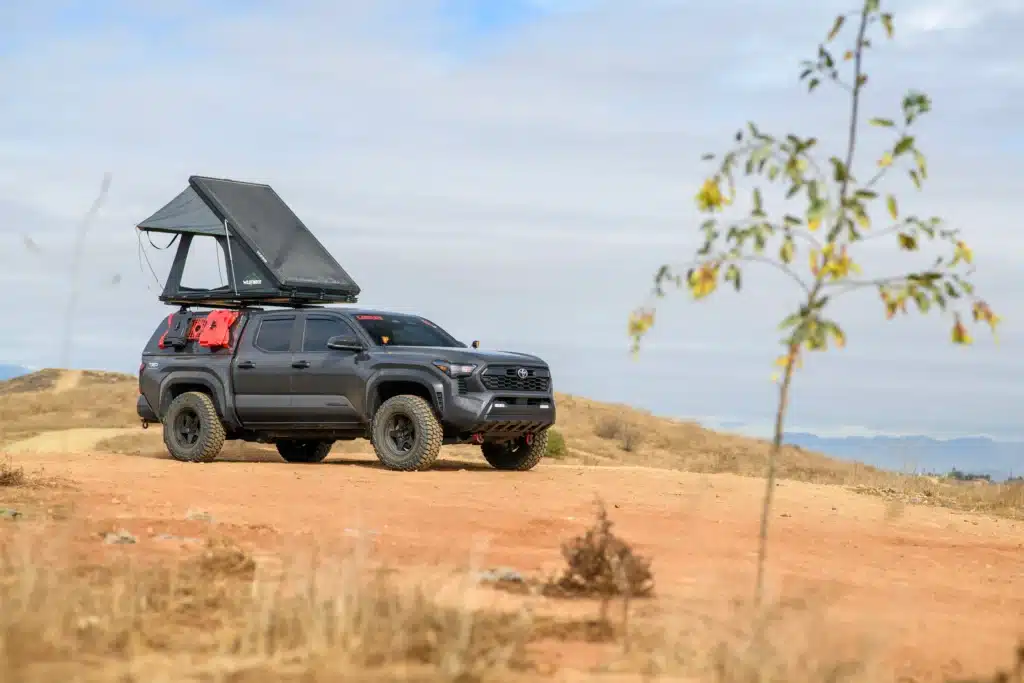
Yes, a rooftop tent on truck cap roofs works well, but only when the cap’s rating matches the load. Most hardshell and softshell tents weigh roughly 100 to 200 lb before you add bedding. Therefore, the tent alone eats most of the dynamic capacity on many standard caps. Add crossbars, a ladder, and a recovery board or two, and you’re already near the limit.
This guide is for truck owners who want a cap for secure, dry storage and a tent on top for sleeping. This combo frees up the bed for gear, coolers, and water. In contrast, a bed rack carries the tent but leaves your cargo open to weather and theft. Our truck bed rack buyer’s guide covers this alternative if you’d rather skip the cap.
Price matters here too. A reinforced cap costs more upfront, although it’s usually cheaper than replacing a cracked shell and the gear soaked underneath it. For example, a weekend on a Wyoming two-track with a tent, a rack, and a couple of bodies inside puts real stress on a roof every night.
Truck Cap Weight Ratings Compared
Published ratings vary more than most buyers expect. The table below lines up the figures from a few key brands.
| Truck Cap | Dynamic Rating | Static Rating |
|---|---|---|
| LEER (standard fiberglass) | 220 lb | 1,000 lb |
| SmartCap | 330 lb | 770 lb |
| Venturous Ozark | 750 lb | 1,500 lb |
Ratings change by model, truck, and rack system, so always confirm the number for your exact build with the dealer.
Built for Rooftop Tents
Meet the Venturous Ozark
A 750 lb dynamic rating gives your tent, rack, and gear real headroom on the trail.
Static vs. Dynamic Weight Rating Explained
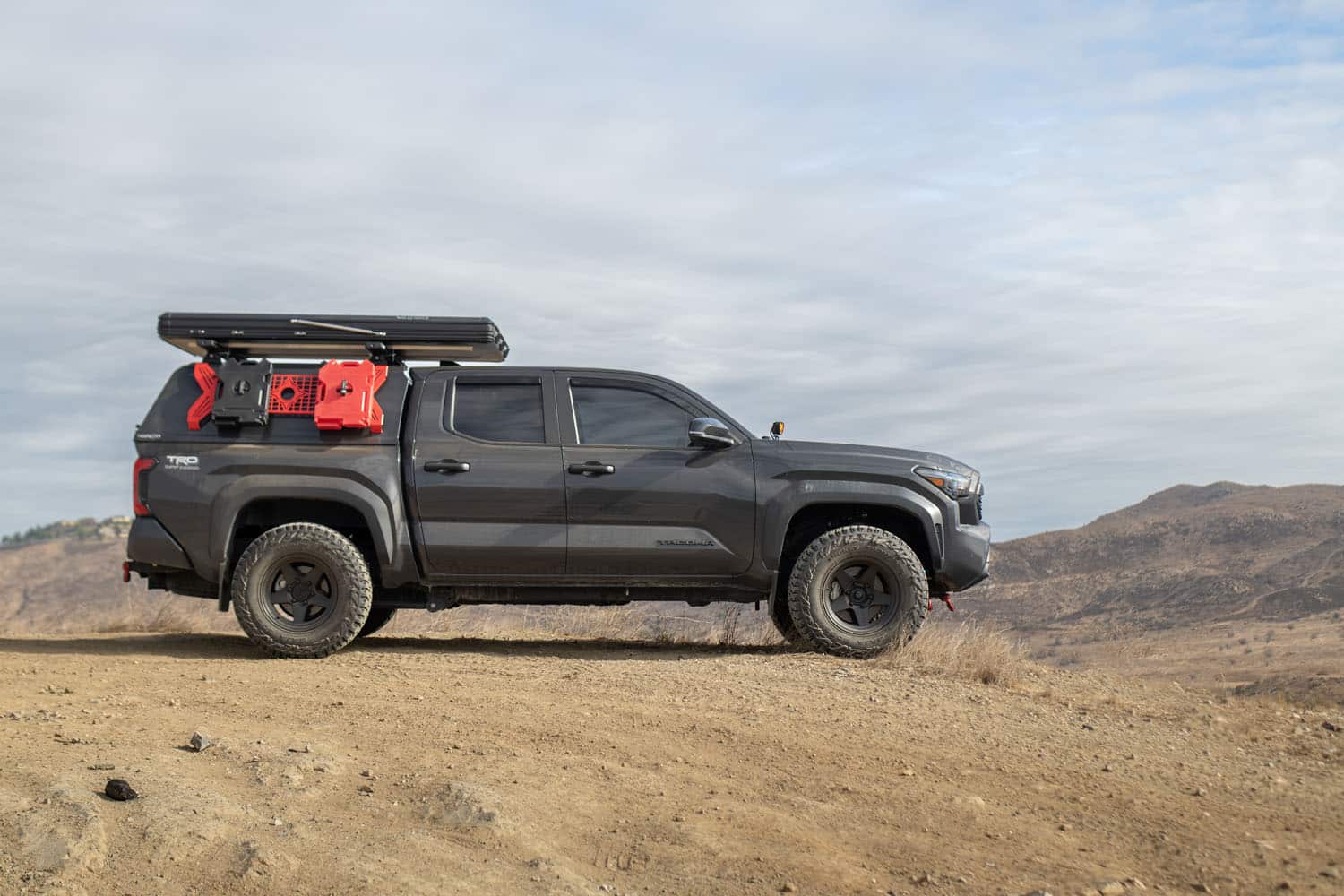
The dynamic weight rating is the number to watch most closely. It’s the load the cap roof handles while the truck is moving. Potholes, washboard, and braking multiply forces on the roof, so dynamic ratings are always far lower than static ones.
The static weight rating, meanwhile, covers the load while you’re parked. This includes the tent, the occupants, your sleeping pads, and the dog who refuses to sleep anywhere else. For instance, two adults at 180 lb each plus a 150 lb tent put 510 lb on the roof. This total fits within a 770 lb static rating, although it leaves little margin.
Which Number to Check First
Start with the dynamic rating, because it’s where most caps fall short. Add the tent weight, the crossbars, the mounting hardware, and anything strapped to the tent. If the total lands within about 80% of the dynamic rating, you’ve got a buffer for rough roads. Next, check the static rating against the tent, the people, and the bedding.
On a 220 lb dynamic cap, a 150 lb tent plus 40 lb of bars leaves only 30 lb of headroom. Consequently, you’d have no room for a recovery board or a solar panel. On the Ozark, the same setup uses about a quarter of its 750 lb dynamic capacity.
Truck Payload Math for a Rooftop Tent on Truck Cap Build
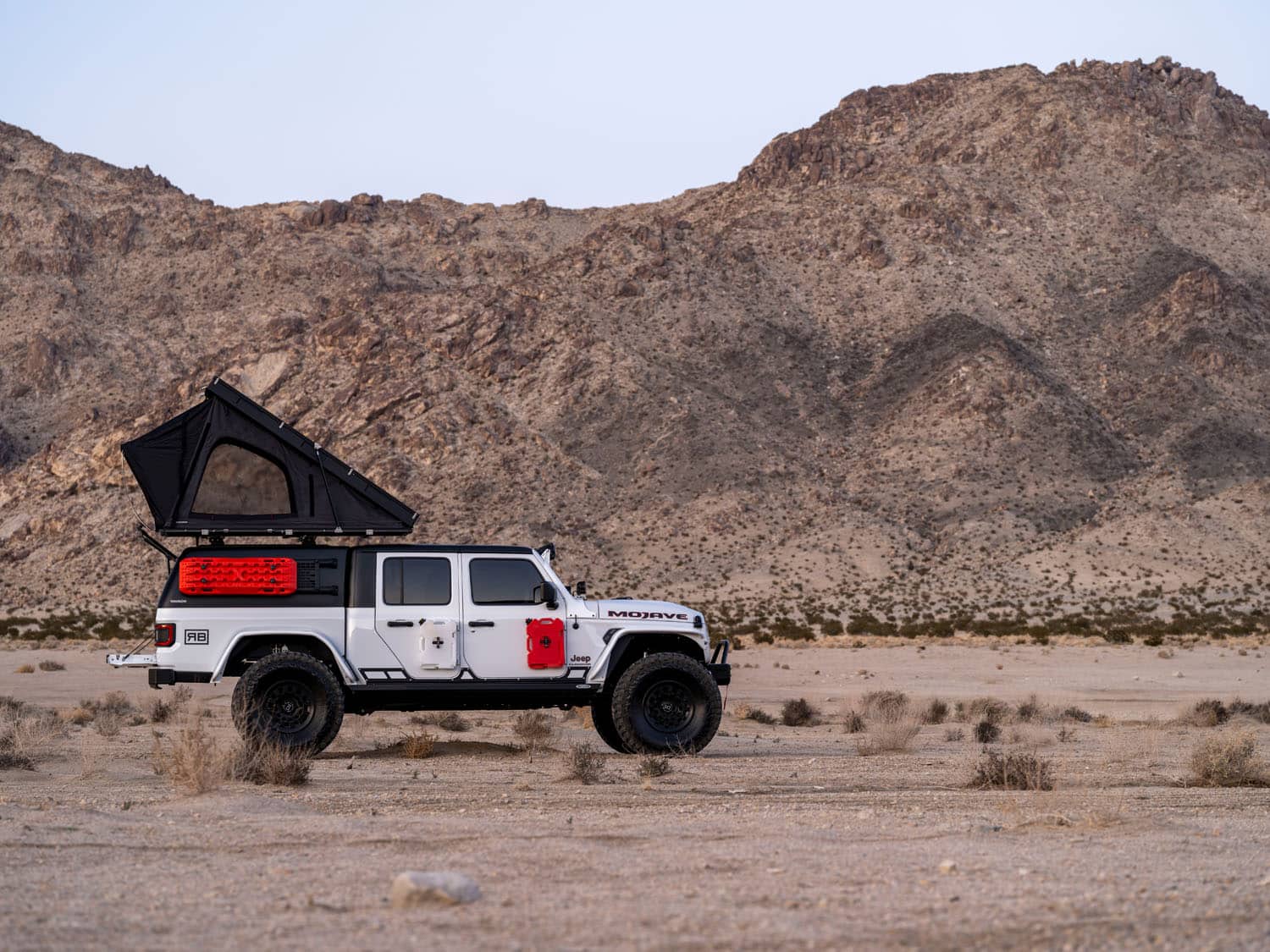
Your cap rating is only half the story. Truck payload is the total weight your truck carries above its curb weight, including passengers, gear, the cap, and the tent. A TacomaWorld commenter put it well: a strong cap won’t help if the whole truck is overloaded.
How to Find Your Payload Number
First, open your driver’s door and find the yellow Tire and Loading Information sticker. It lists the maximum combined weight of occupants and cargo. Notably, this number often runs lower than the brochure figure, since options like 4×4 systems and bigger seats add curb weight.
Running the Numbers
Next, total everything you’ll carry. For example, a typical build might include:
- Fiberglass truck cap: 150 to 200 lb
- Rooftop tent: 100 to 200 lb
- Crossbars and mounts: 20 to 40 lb
- Two adults: 350 lb
- Water, food, and fuel: 100 to 150 lb
- Recovery gear and tools: 50 to 80 lb
- Camp kitchen, cooler, and bedding: 80 to 120 lb
Altogether, it adds up to roughly 850 to 1,140 lb. Many midsize trucks list payloads in this range, so you’re already flirting with the limit before any aftermarket bumper or bigger tires. Because of this, a lighter cap pays off twice. Venturous says its PolyFuse construction makes the Ozark 38% lighter than a traditionally built cap. Every pound you save on the shell becomes a pound you keep for water, gear, or a passenger.
How Roof Weight Changes Handling
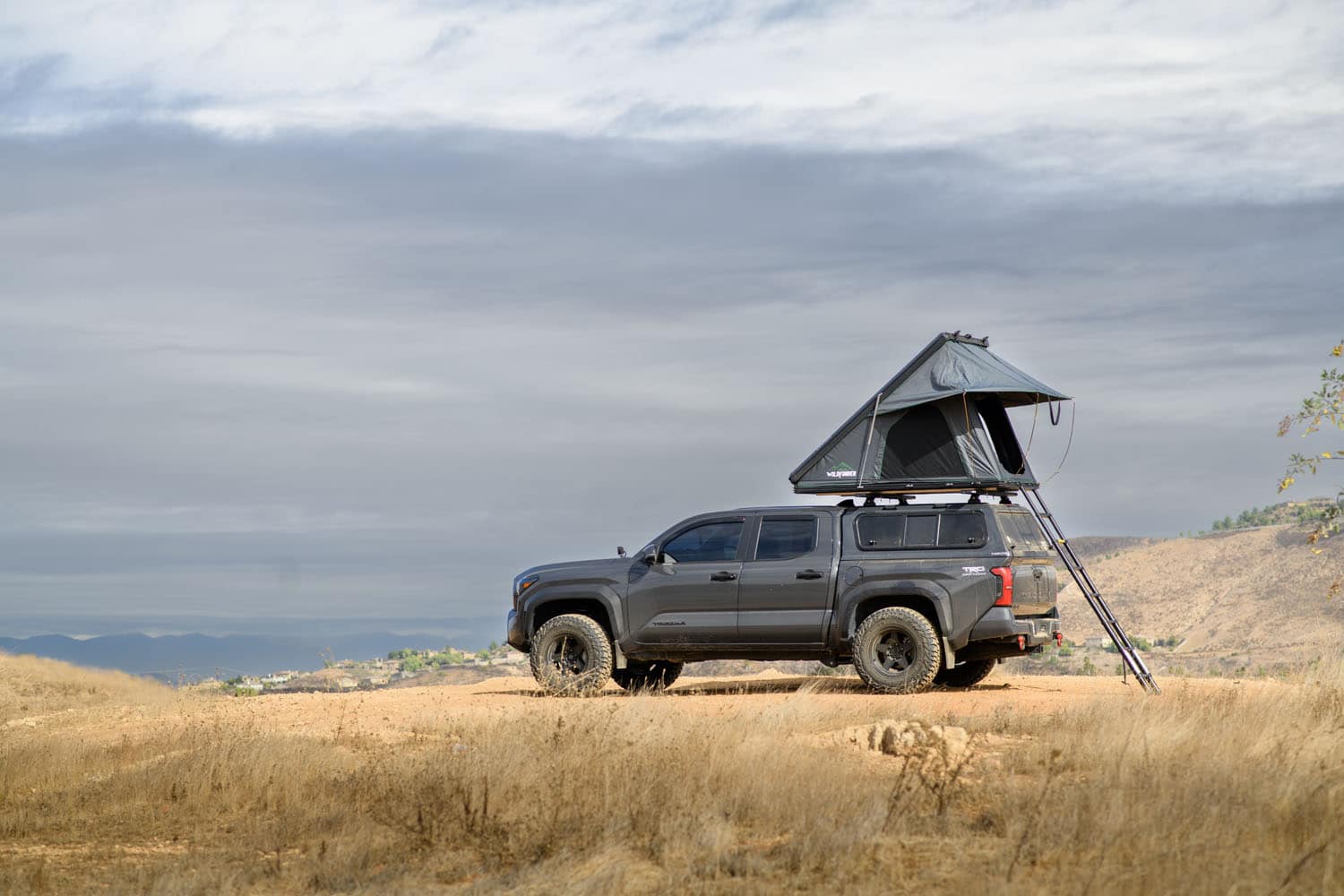
Weight up high behaves differently than weight in the bed. A TacomaWorld commenter warned heavy roof loads change how the truck handles in turns, and it matches what I’ve felt on the trail. A tent on top of a cap sits roughly six to seven feet off the ground on a full-size truck. As a result, body roll increases in corners, crosswinds push harder, and side slopes feel steeper.
Where Handling Gets Sketchy
Off-camber trails are the biggest concern. On a slanted shelf road in Utah, an extra 200 lb on the roof shifts your tipping point noticeably. Similarly, emergency lane changes at highway speed feel slower and wallowier. Braking distances also stretch as total weight climbs.
How to Keep the Load Low
Keep the heaviest items low and centered in the bed. Store water, fuel, and recovery gear under the cap, not on top of it. Instead of strapping a spare tire or jerry cans to the tent, mount them on a bumper or inside the bed. Finally, check your tire pressure and consider upgraded shocks if the truck feels floaty with the tent loaded.
On my Gladiator build, I pay close attention to every pound going above the beltline. Taller tires already raise the center of gravity, so roof weight stacks on top of it. The same rule applies to any truck: weight you put on the roof costs more than weight you put in the bed.
Why Fiberglass Truck Cap Construction Matters
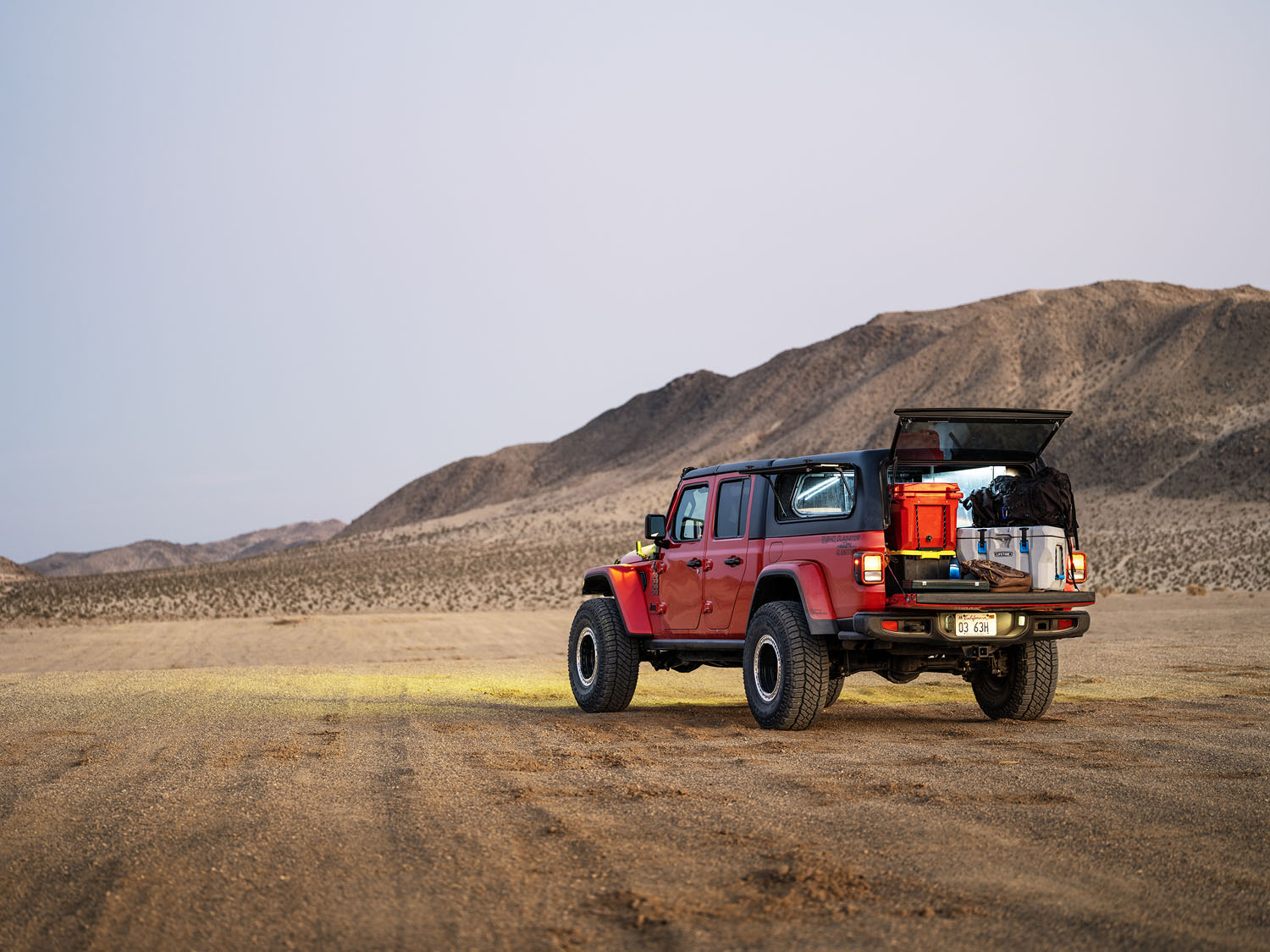
Most caps are hand-laid or chopper-gun fiberglass over a frame. This design works well for cargo protection, but the roof wasn’t originally built for constant point loads from rack feet. Over time, flexing under a tent leads to stress cracks and, in some cases, delamination between the fiberglass and its core.
In contrast, the Ozark uses Venturous’s patented PolyFuse injection-molding process. According to Venturous, the result is triple the strength of a traditionally built cap. The roof also includes PET foam reinforcement designed for racks and rooftop tents, which the company says eliminates the chance of delamination.
The Ozark also offers Rhino-Rack and Yakima crossbars or tracks as factory options. Therefore, you won’t need to drill into a roof and hope you hit something solid. Other standard features include oversized screened side windows for airflow, dark tinted glass, a heavy-duty aluminum rear door, and paint matched to your truck. It fits Chevy, Ford, GMC, Jeep, RAM, and Toyota pickups.
If you’re still weighing whether a rooftop tent suits your style at all, our breakdown of the pros and cons of rooftop tent camping covers setup time, comfort, and cost.
Lighter and Stronger
Save Payload for Your Gear
The Ozark is 38% lighter than a traditional cap and carries 1,500 lb parked.
Venturous Ozark vs. Standard Fiberglass Caps
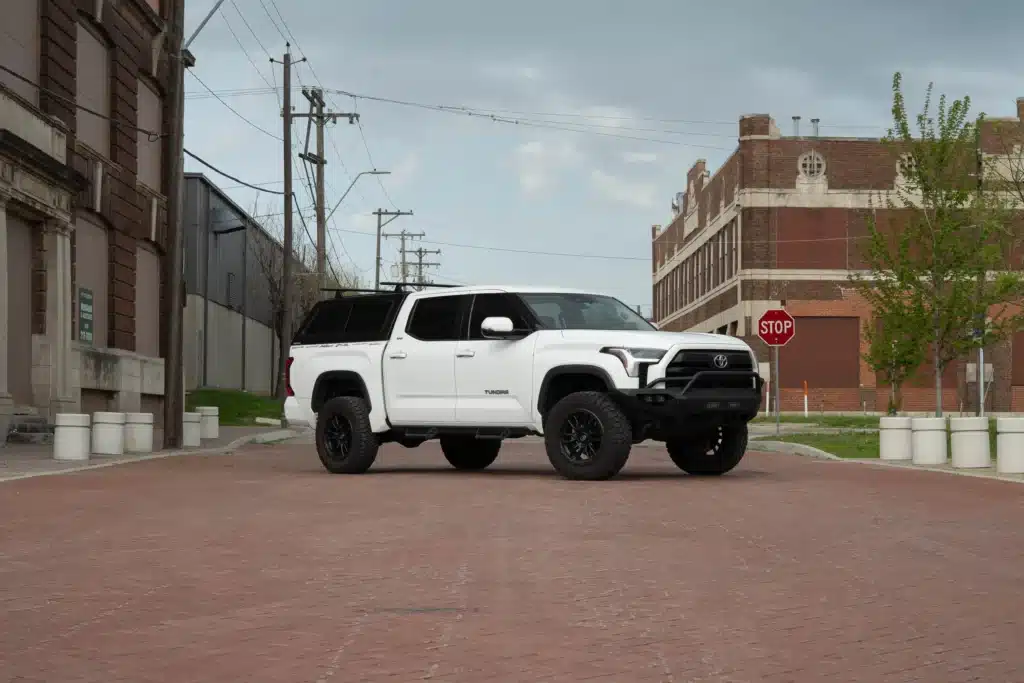
The biggest difference is headroom. A standard fiberglass truck cap with a 220 to 330 lb dynamic rating handles a light tent and bars, but it leaves little room for anything else. The Ozark’s 750 lb dynamic rating covers a heavy hardshell tent, crossbars, and accessories with margin to spare.
Weight is the second difference. Because the Ozark is 38% lighter than a traditionally built cap, it returns payload to the rest of your build. This matters most on midsize trucks, where payload runs tight.
Standard caps still make sense if you’ll never put a tent on top. For example, a contractor hauling tools under a cap doesn’t need a 750 lb roof. However, if a tent is anywhere in your plans, buying the right cap once costs less than replacing a cracked one later. Pricing for the Ozark is quote-based through Venturous dealers.
Final Verdict on a Rooftop Tent on Truck Cap Setup
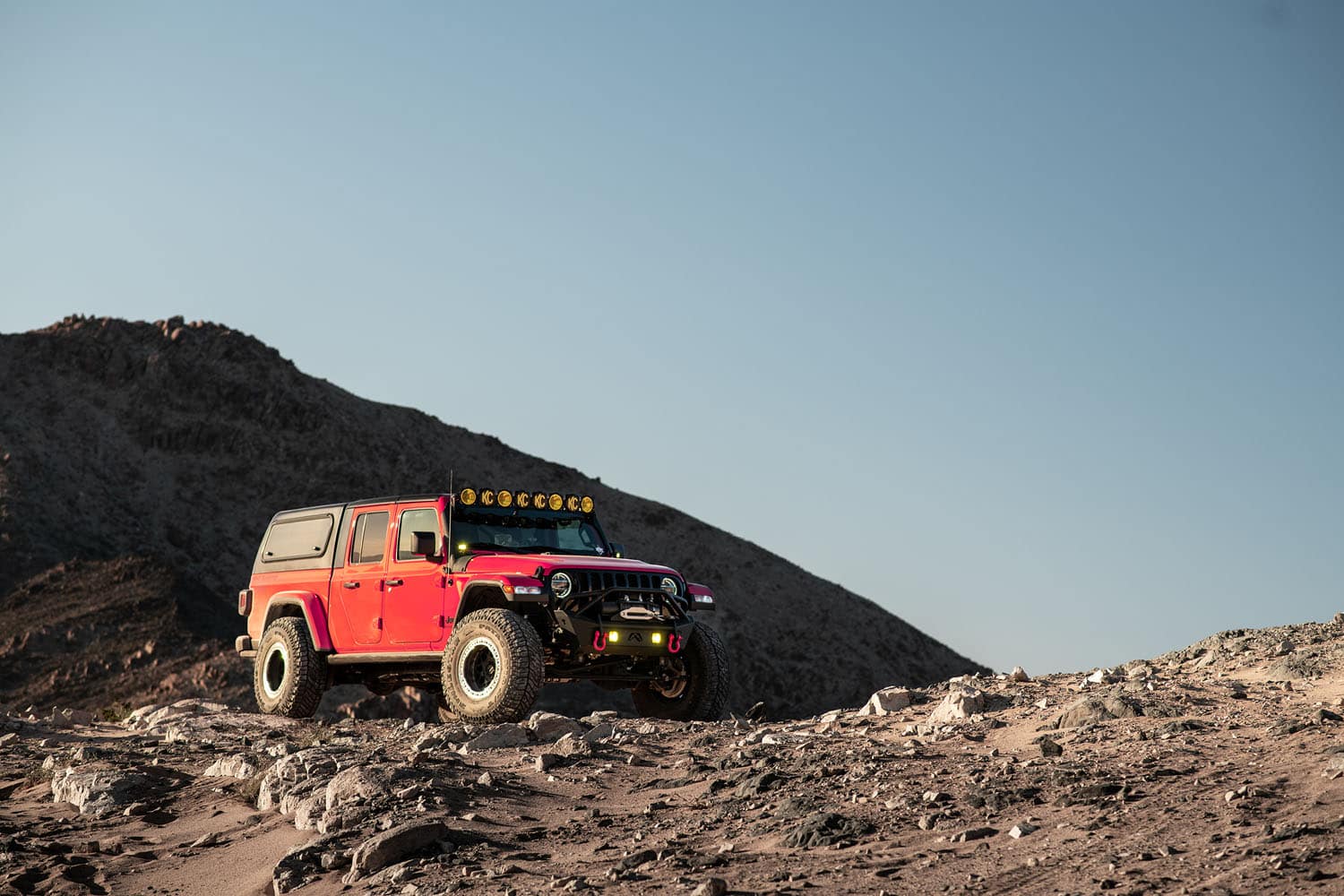
A rooftop tent on truck cap roofs is a great way to sleep off the ground and keep your gear dry. Still, the setup only works when three numbers line up: the cap’s dynamic rating, its static rating, and your truck’s payload. The Ozark’s biggest strength is a 750 lb dynamic rating, more than double the next-highest figure in our comparison.
The trade-off is center of gravity. No cap rating changes physics, so a heavy roof load still makes your truck lean harder in turns and on side slopes. If you drive lots of off-camber trails, consider a lighter softshell tent or a bed rack mounted lower.
On value, a stronger, lighter cap pays for itself in payload and peace of mind. Also, the Ozark includes a limited lifetime warranty on paint and structure, which beats gambling on a roof with 30 lb of spare capacity.
For most overlanders running a tent on a cap, the Ozark is the safer pick. If you’re on a tight budget and your tent weighs under 120 lb, a SmartCap’s 330 lb dynamic rating is the nearest alternative. Either way, run the math before you mount anything.
Ready to Build?
Put Your Tent on a Cap Built for It
Get a quote on the Venturous Ozark with factory rack options for your truck.
FAQ
Will a fiberglass shell hold a rooftop tent?
Many will, as long as the tent, bars, and gear stay under the cap’s dynamic rating. Standard fiberglass caps often rate between 220 and 330 lb dynamic. Always confirm your model’s rating with the manufacturer before mounting a tent.
What’s the difference between static and dynamic weight ratings?
The dynamic rating is the load the cap carries while driving. The static rating is the load it carries while parked, including people sleeping in the tent. Dynamic ratings are always lower because road impacts multiply forces on the roof.
How much weight does a rooftop tent add to a truck?
Most rooftop tents weigh 100 to 200 lb, and crossbars add another 20 to 40 lb. This weight counts against both the cap’s rating and your truck’s payload. Check the sticker in your driver’s door jamb for your payload number.
Does a rooftop tent affect truck handling?
Yes. Weight on the roof raises the center of gravity, so the truck leans more in turns and feels less stable on side slopes and in crosswinds. Keep heavy gear low in the bed to offset it.
What’s the strongest truck cap for a rooftop tent?
Among the caps we compared, the Venturous Ozark has the highest ratings at 750 lb dynamic and 1,500 lb static. Its roof uses PET foam reinforcement designed for racks and tents.
A quick heads-up: If you snag something through our affiliate links or check out our sponsored content, we might earn a commission at no extra cost to you. But fear not, we’re all about recommending stuff we’re truly stoked about!