


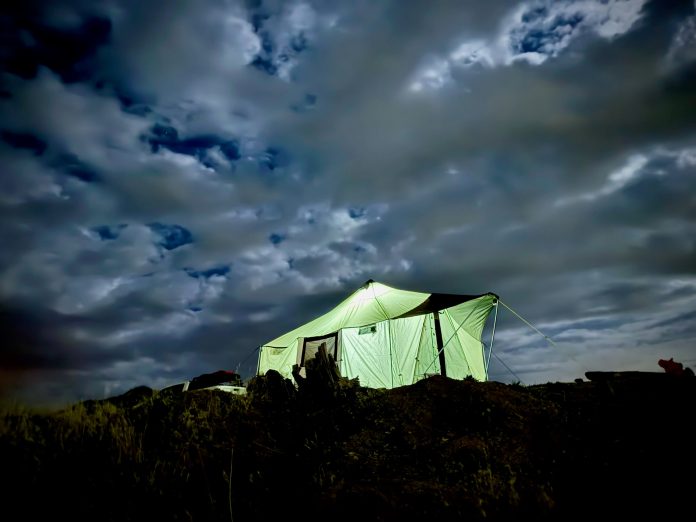

After reviewing a lot of gear over the years, it takes quite a bit to surprise me. Most tents fall into familiar categories. You can usually predict the setup experience, the livability, and the little annoyances you will notice once the sun drops and you are actually living in the space. That is why I did not expect to be caught off guard by this one, especially not from a brand with a long reputation for rugged camp comfort.
Going into my first night with the Montana Canvas Bridger tent, I already had high expectations. Montana Canvas has been making shelters for decades, and they have earned a name for quality (which is why they were named to my list of the best canvas tents of 2025). Still, the first time I pitched it in a real campsite, I kept running into those small “oh, that’s smart” details that you only appreciate when you are tired, the light is fading, and you want camp to be simple.
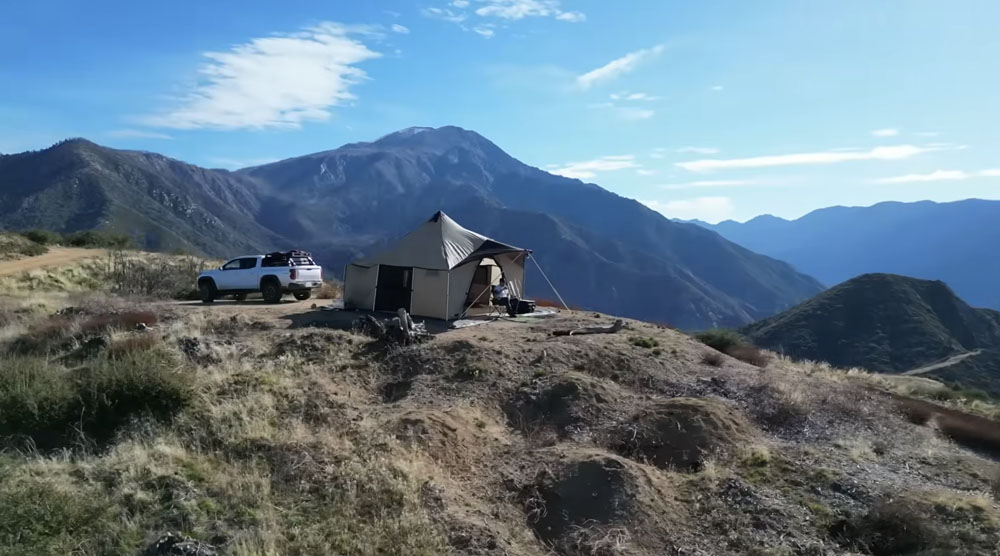
My maiden voyage ended up being one of those evenings that remind you why you bother with all the packing, planning, and driving in the first place. The big front door stayed wide open while the air cooled, the sunset did its thing, and the interior felt less like a cramped tent and more like a comfortable base camp. In this review, I will walk through what this tent is, how it sets up, how it lives, what I loved, what I would change, and who I think it makes the most sense for.
Let’s get started!
If you’re shopping around, see why it made our shortlist of the best ground tents of 2026. For more context on this lineup, see our review of the Montana Canvas Wall Tent Review.
Table of Contents
What the Montana Canvas Bridger Tent is and Who It’s For
The Montana Canvas Bridger tent is best understood as a big, livable base-camp shelter that tries to give you wall-tent comfort without asking you to haul and wrestle a traditional wall tent. It is a 14’ x 14’ footprint with 5’ walls and a 10’ peak, so you get real standing room and usable volume along the perimeter, not just in the center. That footprint matters because it changes how you move around inside. You stop doing that careful shuffle you do in smaller tents and start treating it like a space you can actually use.
I see three main groups getting the most value out of the Montana Canvas Bridger tent. First is the family or small group that wants one large shelter for sleeping and hanging out, especially when the weather forces everyone inside. Second is the hunter or base-camp crew who wants room for cots, duffels, and a stove setup without turning the interior into a maze. Third is the overlander who would rather drive camp comfort in the truck bed than sleep in a rooftop tent every single night, but still wants something that packs efficiently.
If you are the type who measures everything by how fast it pops open, you might not be the target customer. This is not a two-minute instant shelter. It is also not meant for backpacking. The whole point is that you get a large, comfortable structure, you set it up once, and it becomes home for the weekend or the week. The upside is the kind of camp experience where you can sit down, stretch out, and actually enjoy being there.
One personal note here: the longer I camp, the more I value gear that makes the entire trip feel calmer. It is not just about surviving the night. It is about how the space feels at night, how easy it is to keep organized, and whether you wake up excited for coffee instead of annoyed by condensation and clutter. The Montana Canvas Bridger tent aims directly at that style of camping.
Key Specs and Design Highlights of the Montana Canvas Bridger Tent
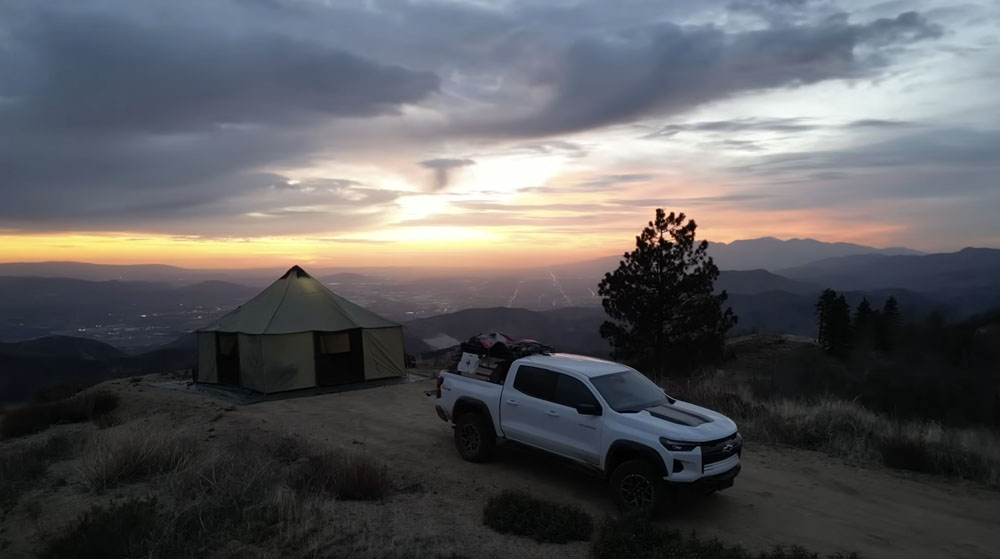
Let’s get the core numbers out of the way because they explain a lot about why this tent feels the way it does. As I noted a moment ago, the Montana Canvas Bridger tent is a 14’ x 14’ shelter with 5’ walls and a 10’ peak. It includes a sewn-in floor and a zip-out section for stove feet, plus a 5” oval stove jack. Those numbers are not just brochure talk. The height changes everything, and the sewn-in floor is a big deal if you have ever tried to keep dust, bugs, and debris under control in a base-camp setup.
Weight and packed size are the other big stories. The full package comes in at about 83 pounds, including the tent body, frame, tension adjusters, stakes, rope, and bag. Packed dimensions are about 62” long by 12” high by 12” wide. In plain language, it is bulky but not ridiculous, and it is easy to stack in the back of a pickup. In my case, it fit well in the bed of a short-bed truck, which is exactly the kind of real-world detail that matters when you’re planning a trip.
Materials are modern, not traditional canvas, which is worth calling out. The tent body uses a 250D polyester with a 1500mm PU coating, and the floor is a heavier 300D polyester with a 3000mm PU coating. The seams are taped for protection from the elements. I am not here to argue polyester versus canvas like it is a religion. I am here to say that this material choice is part of why the Montana Canvas Bridger tent can deliver space and strength without the same weight and bulk you would expect from a classic wall-tent setup.
Finally, the “daily use” features are thoughtfully chosen. You get a large YKK “T” style front door with a screen, a 5’ integrated front awning, screen side windows, peak vents, and an accessory access port for running cords or lines into the tent. I also noticed quality in the little things: the zippers feel substantial, the stitching looks clean, and the stress points are reinforced. Those are the areas where a tent earns trust after real use.
First Setup in the Field: Time, Difficulty, and What Changes in Round Two
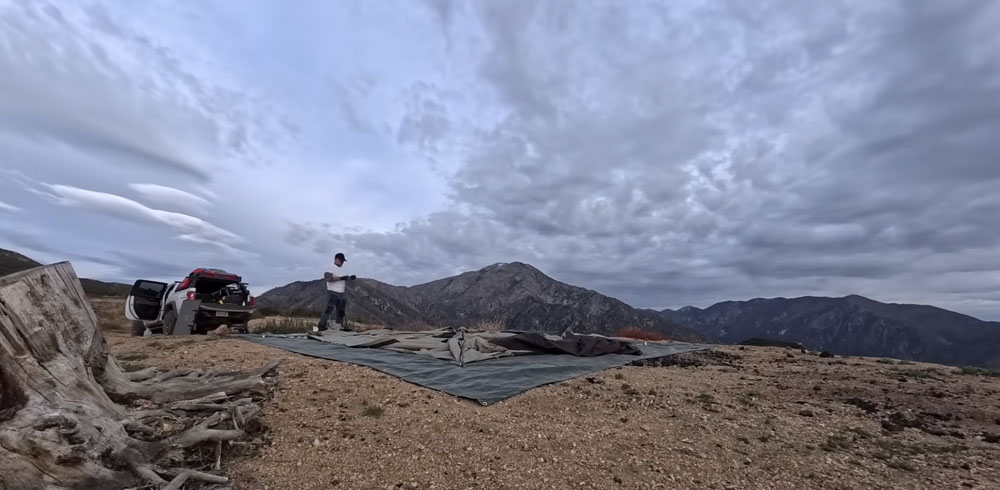
My first pitch of the Montana Canvas Bridger tent took me 41 minutes. That is the honest number, and it is exactly the kind of number I want to know before I buy a tent like this. First setup always runs long because you are learning the order of operations and figuring out how the guidelines like to sit. Once you have done it once, and once the ropes and tension adjusters are already set up in a way that makes sense to you, the pace changes.
After that first setup, my expectation for round two is more like 20 to 30 minutes, possibly less if I am not filming and I am moving with purpose. The structure is intuitive. It is not one of those setups where every step feels like a puzzle. It is simply bigger than the average tent, and bigger almost always means a few more minutes of walking around, staking, tensioning, and making sure everything is square.
One thing that helped is how the package is organized. The duffel is heavy-duty and sized to actually fit the complete kit without playing a frustrating game of “how did this ever fit in here?” The frame has its own bag, and the stakes and ropes have their own storage too. That kind of organization matters more than people admit, because it shapes how quickly you can start and how easy it is to pack up when you are tired at the end.
If you want to shave time, here is my personal approach: treat the first setup as your “training session.” Pay attention to rope lengths, note where you prefer to stake things, and build your own repeatable routine. The Montana Canvas Bridger tent rewards that kind of consistency. Once you have a system, it stops feeling like setup and starts feeling like a quick camp ritual.
Space, Layout, and Livability Inside the Montana Canvas Bridger Tent
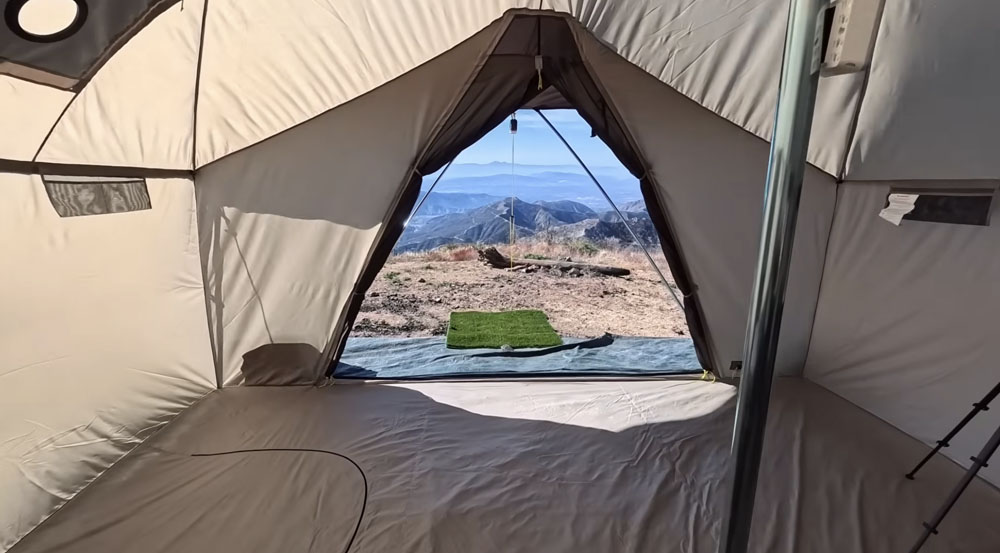
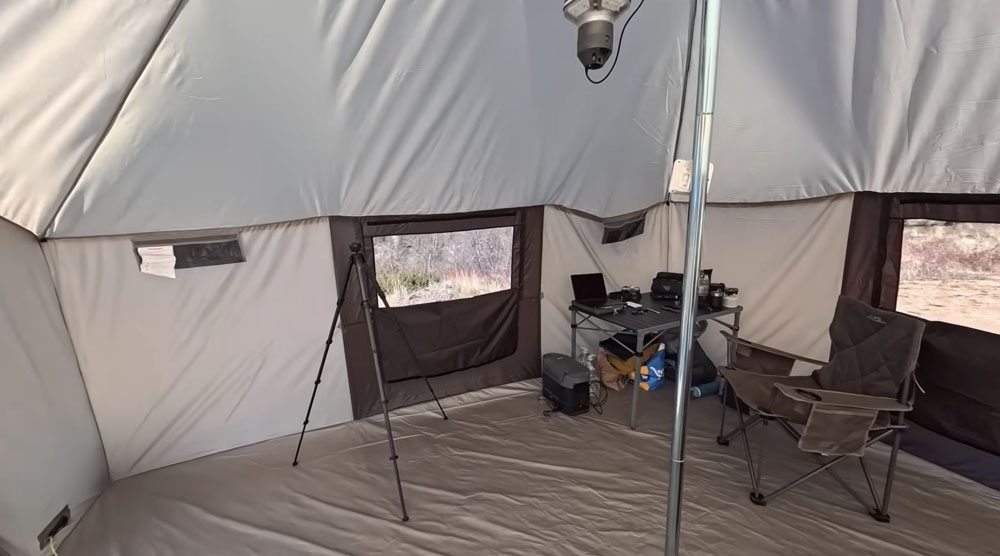
The best compliment I can give the Montana Canvas Bridger tent is that it feels like a place, not just a shelter. A 14’ x 14’ footprint gives you the ability to divide the interior mentally. Sleeping area here, gear there, a small “living room” in the center. The 5’ walls mean you do not lose your usable space the moment you step away from the center pole. And the 10’ peak makes the interior feel open instead of cave-like.
The front door is a huge part of that experience. It is large enough that when it is open, you get that cabin-porch vibe where the outside view becomes part of the interior. On the evening I camped in it, the air was cool enough that bugs were not an issue, so having the door open while the sun set was one of those moments where you feel genuinely grateful you brought the right shelter. You can close it down with the screen when you need airflow without inviting everything that flies.
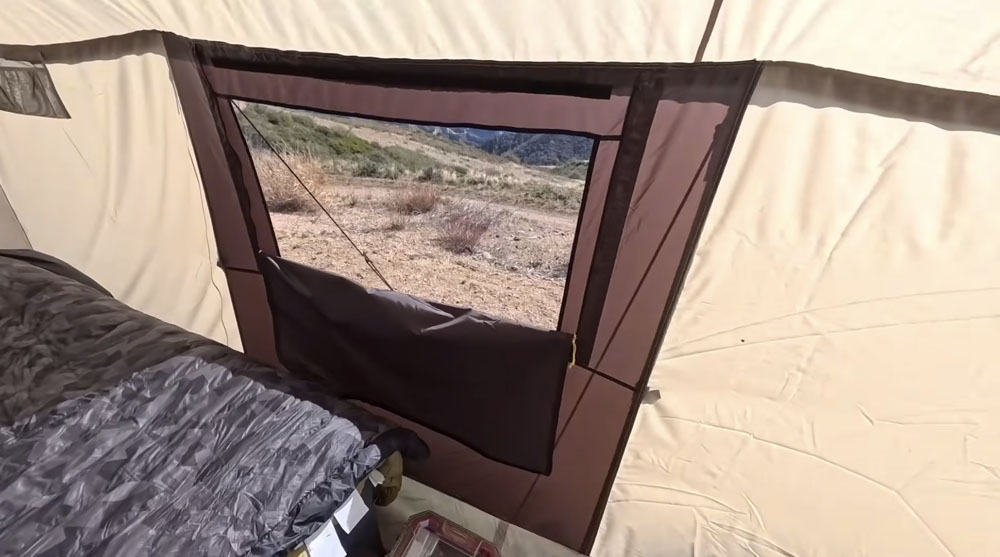
Windows make a bigger difference than people realize, and this tent has multiple zippered screen side windows that are generously sized. In the morning, opening them changed the whole feel of the interior. Light comes in, air moves through, and it stops feeling like a tent you sleep in and starts feeling like a base you want to hang out in. Ventilation and light are a mood thing as much as they are a comfort thing.
Storage is another quiet win. There are multiple storage pockets inside, which sounds minor until you have a headlamp, a lighter, gloves, and chargers that normally end up scattered across the floor. A tent this big can become messy fast if it is not designed for organization. The Montana Canvas Bridger tent gives you enough built-in storage that you can keep the essentials off the floor and easy to reach when you are half asleep.
Weather Protection and Ventilation: Wind, Rain, and Condensation
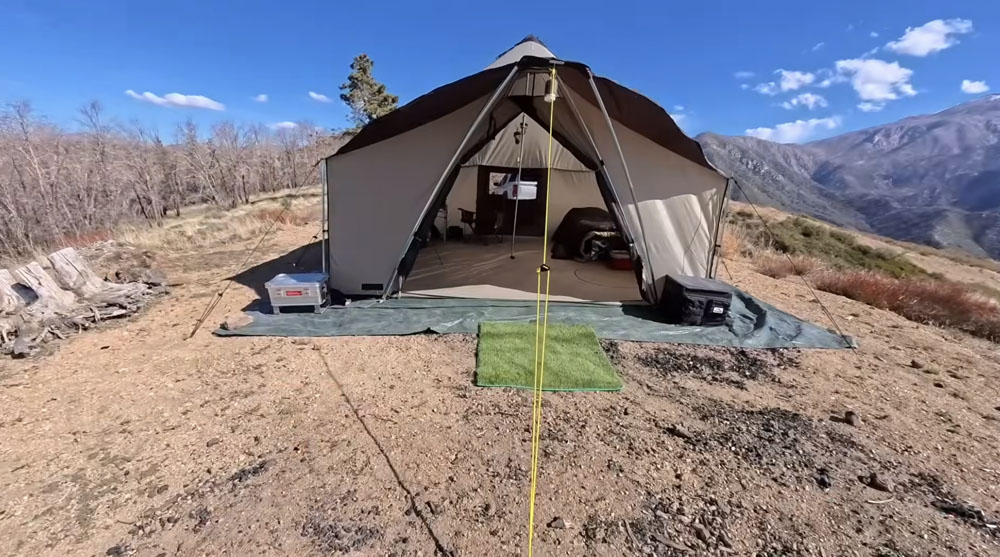
The morning exterior walk-around was when I appreciated how the Montana Canvas Bridger tent is built. You can see reinforcing at corners and stress points, and you can tell the designers assumed it would be used in real conditions, not just calm weather at a campground. The stakes are solid, the guidelines are substantial, and the overall structure feels confident when you tension it properly.
The integrated awning is not just a nice-to-have. It extends about 5 feet and sits at a height that makes it genuinely usable for standing, moving, and setting up a chair and small table. I also noticed a strengthening element inside the awning edge that helps it hold shape. In moderate wind, you can see movement, but it did not feel flimsy. It felt like the kind of awning you can trust if you stake and tension it correctly.
Rain and weather protection are supported by seam taping and by small design choices like the overhanging trim along the sides. That little overhang helps direct water away from the main wall surface, which is the kind of practical design that tends to show up on gear built by people who actually camp. Materials matter too. A 1500mm PU coating on the body and a 3000mm coating on the floor are geared toward keeping you dry when the weather turns.
Ventilation is where this tent plays both offense and defense. You have multiple vents, including three at the peak and a vent under the awning area, which helps air move through the structure. That airflow can reduce condensation issues, especially with multiple people inside. If you have ever woken up to a damp interior, you know why this matters. The balance is managing ventilation without sacrificing heat, and I will talk about that tradeoff in the cons section.
Hot-Tent Readiness: Stove Jack, Floor Opening, and Heater Reality
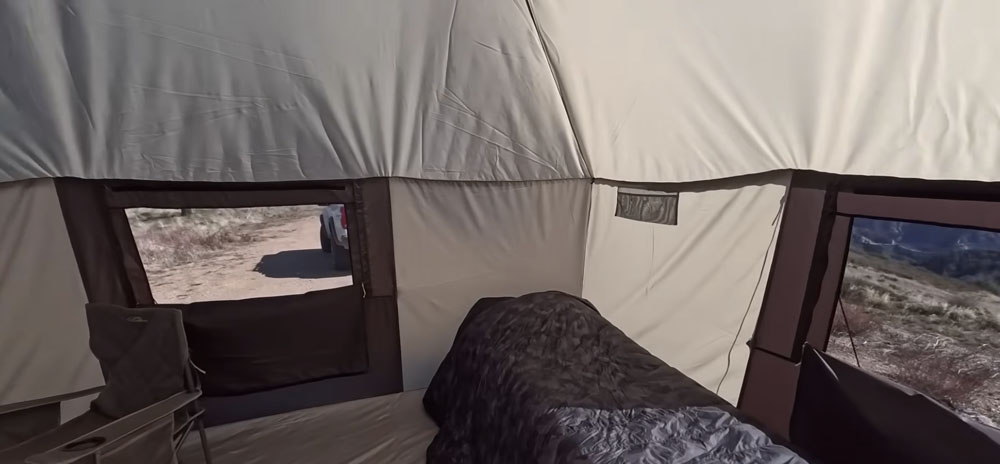
One of the reasons people look at the Montana Canvas Bridger tent is its hot-tent capability. On paper, it checks important boxes: a 5” oval stove jack, a corresponding zippered floor opening for stove feet, and enough interior volume that you can run heat without feeling like you are sleeping on top of your stove. In practice, it also looks well executed. The stove jack area uses thick, durable material, and the stitching around that zone looks like it was done with care.
I ran a small gas heater overnight, and the experience was exactly what I wanted from a base-camp hot-tent setup. The heat was comfortable, and the tent volume held warmth well. This is where size helps you. You can place heat where it makes sense, you can keep sleeping gear at a safe distance, and you do not feel like one wrong move will put fabric too close to a hot surface.
There is also a practical floor feature that matters when you actually run a stove. The zippered floor opening allows you to position the stove feet properly without fighting the sewn-in floor. That kind of detail separates “hot-tent capable” from “hot-tent friendly.” A tent can have a stove jack and still feel awkward to use with heat. The Montana Canvas Bridger tent feels like it was designed with real hot-tent scenarios in mind.
That said, hot tenting today often means diesel heat, not just wood stoves. Burn bans are real in many areas, and sometimes you want dry heat without the hassle of managing wood. The tent includes an accessory access port, but the diesel heater hose situation is not as seamless as I would like. It is workable, but there is room for improvement, and I will get specific about that in the verdict section.
Small Details That Make the Montana Canvas Bridger Tent Easier to Live With
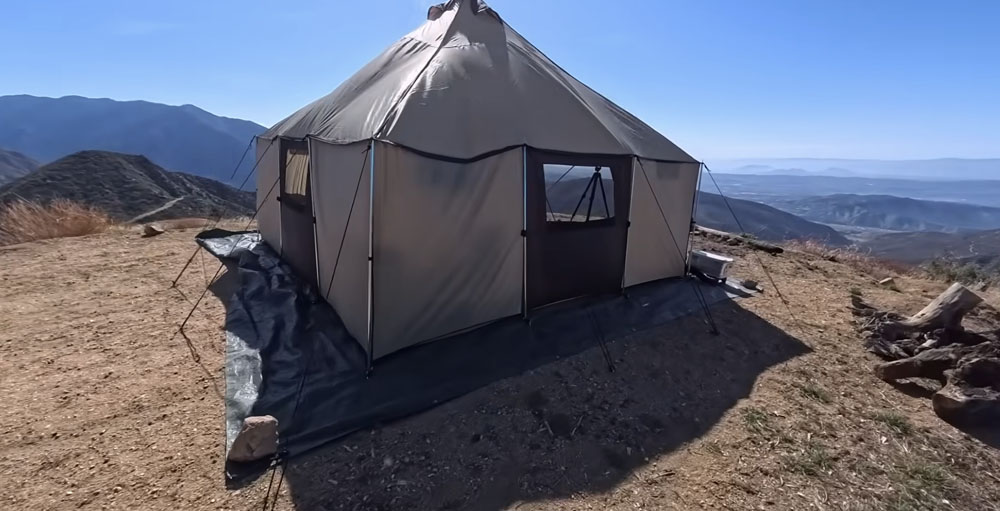
The longer you camp, the more you appreciate details that reduce friction. The Montana Canvas Bridger tent has several of those. One of my favorites is the visibility choice on the front guideline. Most guidelines are black, but the front uses a yellow line for visibility. It is such a simple idea, and it solves a real problem. Everyone has tripped over a guideline at night. Making the front one easier to see is a quiet, smart move.
I also like the two-tone color approach. It is not just about looks, though it does look sharp. Contrast helps your eyes read the tent shape and corners in low light. That matters when you are moving around camp after dark. The trim and reinforcement along seams and corners also feel purposeful. It gives the impression of a shelter that expects real tension and real use, not careful handling.
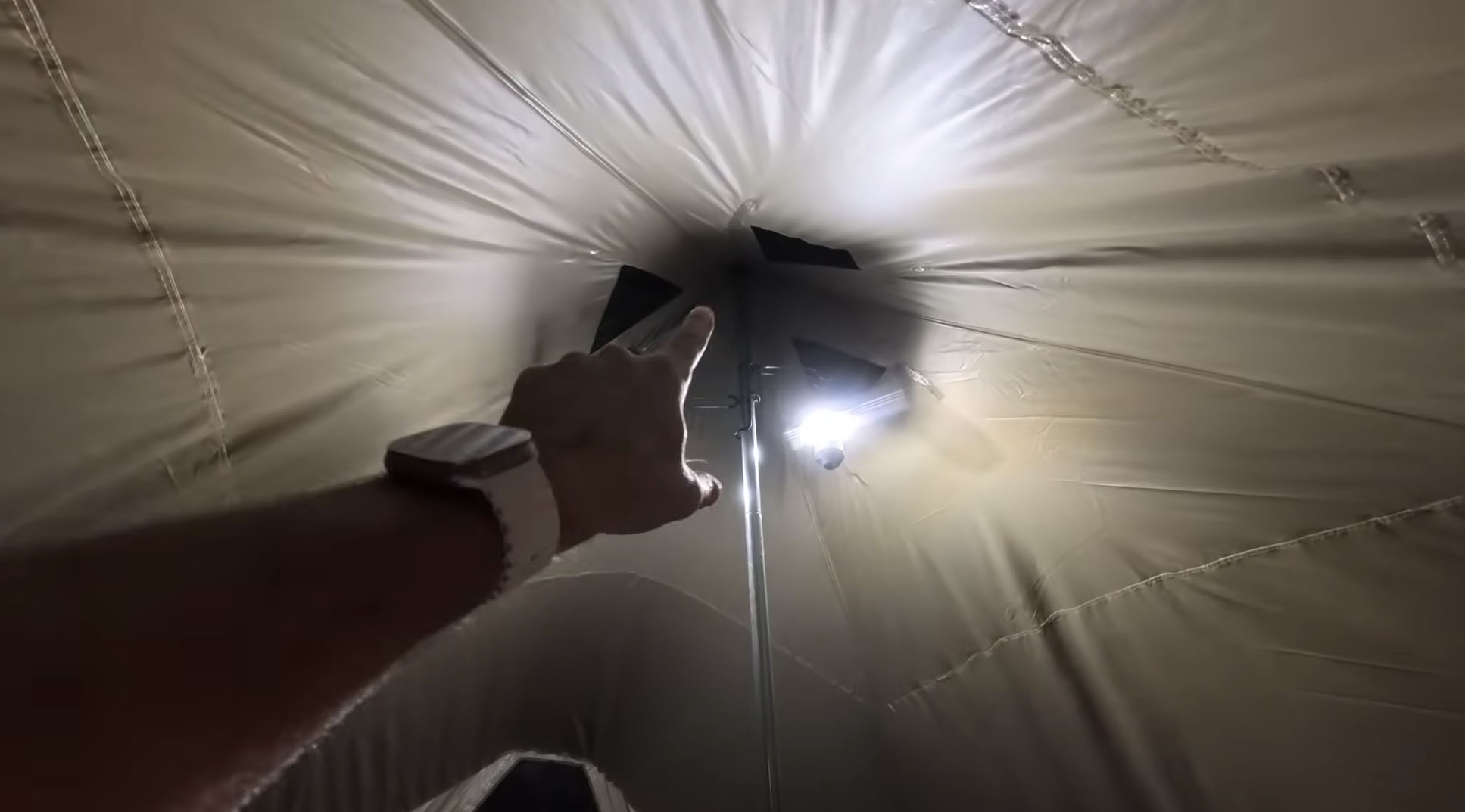
Another detail that deserves more attention is the top ring that allows you to suspend the center from above if you are in a spot with a suitable branch. You still need to choose your site wisely, but the option is there. That is a clever piece of flexibility because it gives you another way to manage interior space and structure depending on the environment you are camping in.
Finally, the tent’s openness is a feature in itself. The ability to roll sections up, secure them cleanly, and shift between open-air living and a closed-up shelter makes the experience feel less cramped. When conditions are right, the Montana Canvas Bridger tent lets you feel connected to the outside without giving up comfort. That is the vibe I am chasing more and more with every trip.
The Cons, Workarounds, and Where the Montana Canvas Bridger Tent Fits Best
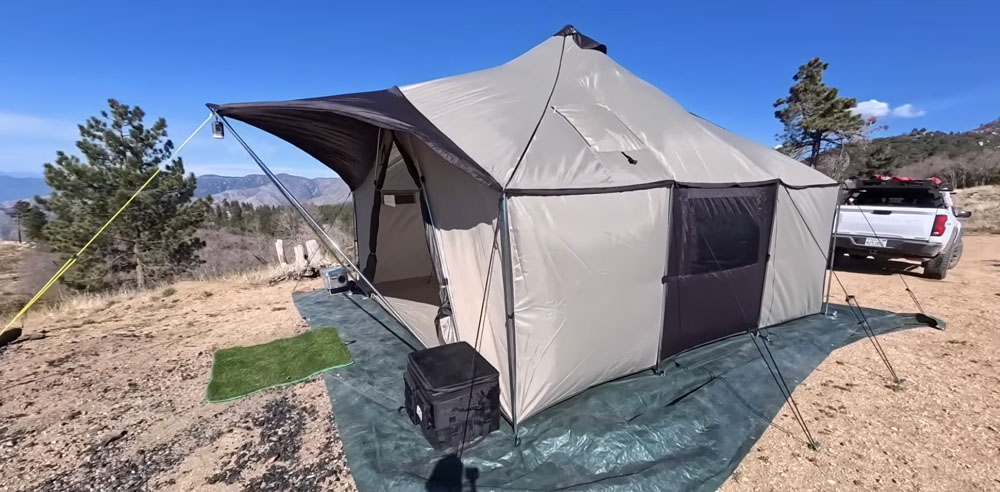
I love this tent, but there are two items I am going to call out as cons because they affect real comfort, especially if you are buying this specifically for cold-weather use. The first is the vent above the doorway that does not have a cover or flap. I understand why it exists. Ventilation reduces condensation, and if you are running a stove that draws moisture out of the air, you will still want some airflow. But when you are hot-tenting, heat retention matters too.
Here is what made it noticeable for me: with dry heat running, my interior humidity sat around 33%, which is very reasonable. In that scenario, I would love to be able to partially or fully close that vent to retain more heat. Even a simple Velcro flap would allow the user to decide. I am not asking Montana Canvas to remove ventilation. I am asking for adjustability so the tent can adapt to different heat sources and different conditions.
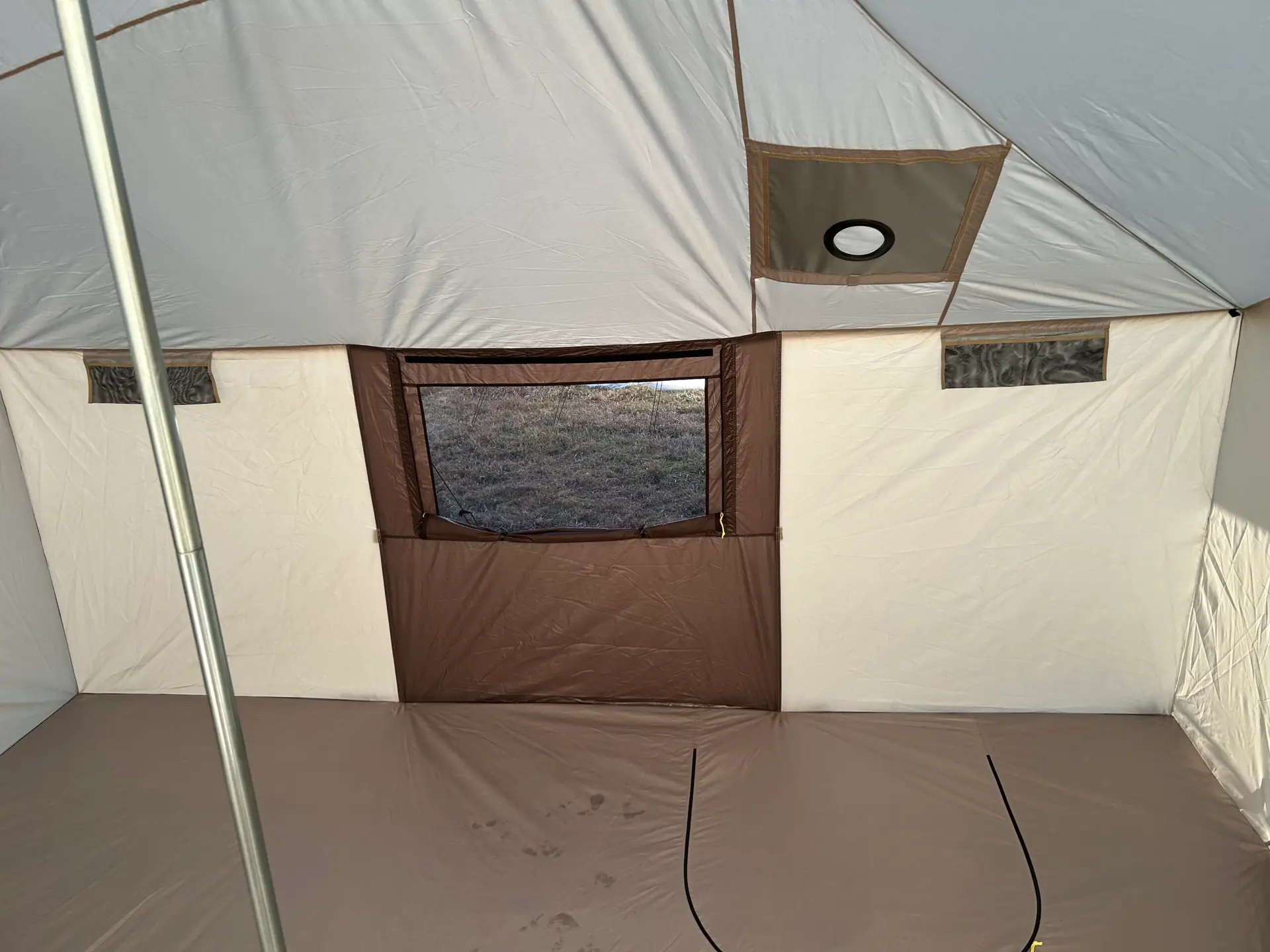
The second con is the lack of a purpose-built diesel heater inlet. The accessory pass-through is great for wires or small lines, and I appreciate that it exists. But a 3-inch diesel heater hose is a tight squeeze. I was able to make it work by compressing the hose slightly, but it is not the smooth, confidence-inspiring solution I want for a tent that will absolutely be used on burn bans and cold-weather trips. A dedicated inlet would make the Montana Canvas Bridger tent more versatile without changing its identity.
So where does it fit best? If you want a big base-camp tent that packs reasonably for a truck, sets up in a manageable time, and delivers a comfortable interior that makes camping feel rewarding, this is an easy recommendation. If your priority is instant setup speed or ultralight portability, it is not the right tool. For me, the Montana Canvas Bridger tent hits that sweet spot where you feel like you brought something substantial, but you do not feel like you brought your entire garage into the woods.
FAQ
How long does it take to set up the Montana Canvas Bridger tent?
My first setup took 41 minutes. After you’ve done it once and your ropes are dialed, 20–30 minutes is a realistic expectation.
How heavy is the Montana Canvas Bridger tent package?
The complete package is about 83 pounds, including the tent body, frame, stakes, ropes, tension adjusters, and bags.
What are the packed dimensions of the Montana Canvas Bridger tent?
When packed in the duffel, it is roughly 62 inches long by 12 inches high by 12 inches wide.
Is the Montana Canvas Bridger tent a true hot tent?
Yes. It includes a stove jack and a zippered floor opening designed to accommodate stove placement, making it well-suited for hot-tent use.
Does the Montana Canvas Bridger tent work with a diesel heater?
It can, but it is not perfect. The access port works in a pinch, but a dedicated diesel heater inlet would be a better long-term solution.
How is ventilation handled in the Montana Canvas Bridger tent?
It uses multiple vents, including three at the peak and a screen vent under the awning, which helps manage airflow and condensation.
Who is the Montana Canvas Bridger tent best for?
It is best for base-camp style trips, families, hunters, and overlanders who want a roomy, comfortable shelter that still transports well in a truck.
A quick heads-up: If you snag something through our affiliate links or check out our sponsored content, we might earn a commission at no extra cost to you. But fear not, we’re all about recommending stuff we’re truly stoked about!