




Do You Need a Portable Fridge for Car Camping? (Cooler vs 12V Fridge Compared)
Quick Verdict: A portable fridge for car camping is worth the investment if you camp more than 8-10 weekends per year. At roughly $5-$10 in ice per trip, a traditional cooler costs $80-$150 per season in ice alone. Meanwhile, a compressor fridge like the TRP 4×4 Mammoth eliminates ice costs entirely, keeps food at a precise temperature for days, and weighs only 15 lbs. For weekend-only campers, however, a quality cooler still makes sense. Below, we break down the real costs, power requirements, and best picks at every budget.
Last updated: March 2026 | 10 min read
In This Article
- Why This Decision Matters for Overlanders
- Key Facts at a Glance
- When a Traditional Cooler Is Good Enough
- When You Need a Portable Fridge for Car Camping
- The Real Cost: Ice vs Electricity Over a Season
- Power Draw and Battery Sizing
- Best Portable Fridge for Car Camping at Every Price Point
- TRP 4×4 Mammoth vs Traditional Coolers
- Pros and Cons of Each Approach
- Final Verdict
- Frequently Asked Questions
Why This Decision Matters for Overlanders

Choosing between a portable fridge for car camping and a traditional cooler is one of the first gear decisions every overlander faces. Consequently, it affects your food quality, trip length, cargo space, and long-term costs. I currently have five portable fridges in testing rotation, and after years of running coolers before them, I have a clear picture of when each option makes sense.
A traditional cooler is simple: fill it with ice, load your food, and go. There are no wires, no battery concerns, and no moving parts. But ice melts. On a three-day summer trip, you will likely need to restock ice at least once. By day two, your food is sitting in cold water, and anything not sealed properly is soaked. I learned this the hard way on a Moab trip years ago when three days of groceries turned into a soggy mess by the second morning.
A compressor fridge, on the other hand, solves those problems. It holds a set temperature (typically 0°F to 50°F), runs off your vehicle battery or a portable power station, and keeps food dry and safe for days. The tradeoff is cost. Budget models start around $230, while premium options like the TRP 4×4 Mammoth run $450. Still, when you factor in a full season of ice purchases, the gap narrows faster than you expect.
Below, we compare both options across cost, performance, weight, and convenience so you know exactly which portable fridge for car camping setup (or cooler) fits your style.
Key Facts: Cooler vs Portable Fridge for Car Camping
| Factor | Traditional Cooler (45 Qt) | Compressor Fridge (40L) |
|---|---|---|
| Upfront Cost | $50-$325 | $230-$560 |
| Annual Ice/Power Cost | $80-$150 (ice) | $5-$15 (electricity) |
| Temperature Control | None (depends on ice melt rate) | Yes (digital, 0°F to 50°F) |
| Runtime Without Resupply | 24-72 hours (climate dependent) | Unlimited (with power source) |
| Weight (Empty) | 15-25 lbs + 10-20 lbs ice | 15-50 lbs (no ice needed) |
| Food Safety | Risk increases as ice melts | Consistent temp, low risk |
| Power Required | None | 12V/24V DC or 110-240V AC |
| Freeze Capability | No | Yes (most models reach 0°F) |
Featured Product
TRP 4×4 Mammoth Freezer Fridge (40L)
The lightest 40L compressor fridge we have ever tested. Only 15 lbs with EPP construction, and no mounting hardware needed. $450 with no hidden costs.
When a Traditional Cooler Is Good Enough

A cooler is the right choice if you camp fewer than 6-8 weekends per year and rarely stay out longer than two nights. In those situations, the upfront savings and zero-complexity setup are hard to beat. Specifically, if your camping involves established campgrounds with ice available on-site, a cooler keeps things simple.
For a one-night car camping trip in spring or fall (ambient temps under 75°F), a well-packed RTIC 45 Hard Cooler ($239) holds ice for 48+ hours. Pre-chill the cooler overnight, use block ice instead of cubes, and you will have cold food through the entire trip. Similarly, if you are car camping at a site with a general store nearby, restocking ice is easy and cheap.
The YETI Tundra 45 ($325) is the benchmark premium cooler, with 3+ inches of lid insulation and a rotomolded shell built to survive years of abuse. Yet even a YETI needs ice. On a hot July weekend (95°F+), expect to burn through 20 lbs of ice per day. At $3-$5 per bag, a three-day trip costs $10-$15 in ice alone, plus a side trip to a gas station or camp store.
Coolers also work well as secondary storage. In fact, many overlanders run both a portable fridge for car camping and a cooler for drinks and overflow items, especially on group trips or extended base-camp setups.
When You Need a Portable Fridge for Car Camping
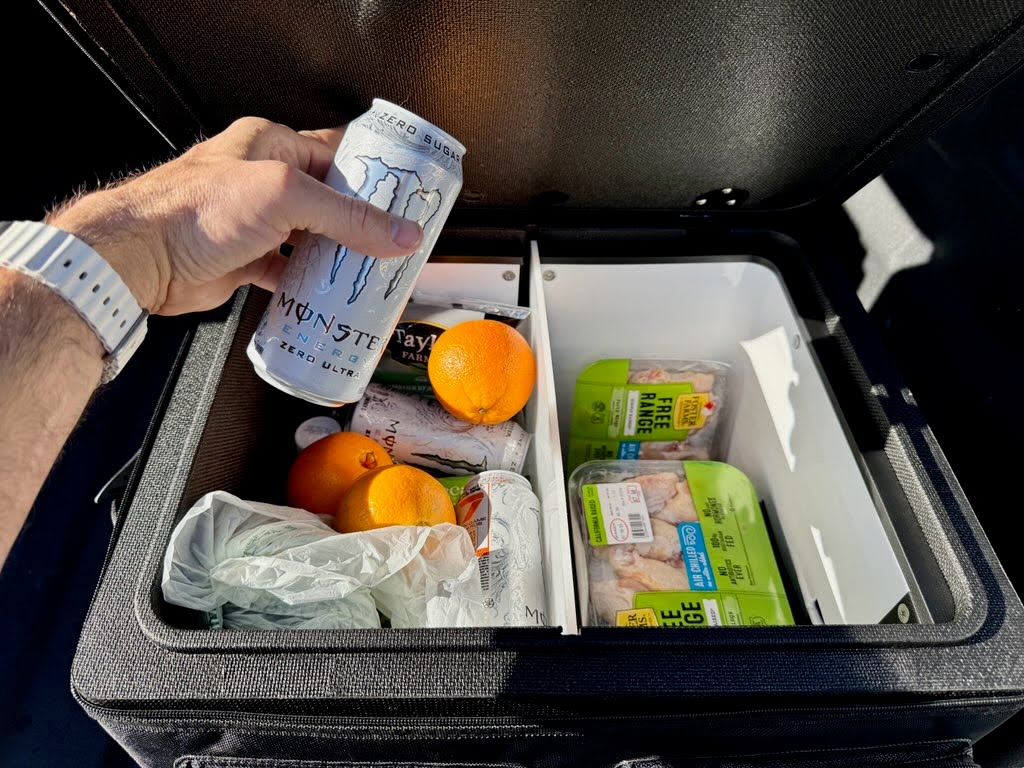
A camping fridge becomes the better option once your trips regularly exceed two nights or you camp in hot climates. Here’s the real difference: a cooler starts at 32°F when you pack it and slowly climbs. By day two in summer, you are pushing 50°F, and food safety becomes a genuine question. A compressor portable fridge for car use holds whatever you set, whether 35°F or 0°F, regardless of the outside temperature.
I realized this during a five-day route through Death Valley. The nearest supply run was 140 miles back. On a previous trip with a cooler, we were at 55°F internal temps by day three and eating canned soup for dinner. With the Mammoth on this run, we had fresh steak on day five. Precise cooling changes your food options entirely, and once you experience it on a multi-day trip, going back to ice feels like a downgrade.
A car fridge also eliminates the wet-food problem. In a cooler, everything eventually sits in meltwater. Sealed bags leak. Labels peel off. Produce turns to mush. Because a compressor fridge uses no ice, food stays dry and organized in compartments. As a result, you waste less food and spend less time repacking.
For van lifers and full-time overlanders, a portable refrigerator is essential infrastructure. You are grocery shopping and meal planning for the week, so you need reliable cold storage. Our guide to cooking and food storage for overlanding covers the full kitchen setup in detail.
The Real Cost: Ice vs Electricity Over a Camping Season
The biggest argument against a portable fridge for car camping is the upfront price. However, the math shifts quickly once you account for ice costs over a full camping season.
A typical overlander camps 15-25 weekends per year. At an average of $7 per trip in ice (two bags at $3.50 each), a 20-weekend season costs $140 in ice alone. Over three years, you spend $420 on ice. In contrast, running a car fridge off your vehicle’s alternator or a portable power station costs roughly $0.50-$1.00 per trip in electricity. As a result, your total power cost over three years stays under $60.
| Scenario | Year 1 Total | Year 3 Total |
|---|---|---|
| RTIC 45 Cooler + Ice (20 trips/yr) | $379 | $659 |
| YETI Tundra 45 + Ice (20 trips/yr) | $465 | $745 |
| BougeRV 42Qt Fridge + Power | $256 | $276 |
| TRP 4×4 Mammoth 40L + Power | $460 | $480 |
| ICECO VL45 + Power | $569 | $589 |
By year three, a BougeRV portable fridge for car camping is $383 cheaper than a YETI cooler with ice. Even the premium TRP 4×4 Mammoth costs $265 less than a YETI over three years. Because of this, the “fridges are too expensive” argument falls apart for anyone who camps regularly.
On top of cost savings, you also reclaim usable cargo capacity. Consider this: a 45-quart cooler loaded with 20 lbs of ice leaves roughly 25 quarts of actual food space. In contrast, a 40L portable fridge gives you the full 40 liters since none of it goes to ice.
Lightest in Its Class
TRP 4×4 Mammoth: 40L at Only 15 lbs
No slides, brackets, or mounting hardware required. Move it between vehicles, campsites, and your garage with one hand.
Power Draw and Battery Sizing for a Portable Fridge
Everyone asks whether a portable fridge for car use will kill their battery. Fair question. But here is what happens in the real world.
A typical 40L compressor fridge draws 40-60 watts while the compressor is actively running. However, the compressor does not run continuously. Once the unit reaches its set temperature, it cycles on and off. In practice, average draw over 24 hours is closer to 1-2 amps per hour (12-24 Ah per day), depending on ambient temperature, how often you open the lid, and insulation quality.
Insulation quality matters more than compressor specs. For example, the TRP 4×4 Mammoth uses EPP (Expanded Polypropylene) construction, a material borrowed from automotive and aerospace applications. Because EPP insulates more effectively than standard plastic or metal housings, the compressor cycles less frequently. During my testing in the Sierra Nevadas, the Mammoth held temperature overnight with minimal power draw, even with wide temperature swings between blazing afternoon sun and freezing nights. The compressor barely kicked on between 10 PM and sunrise. You get the full breakdown in our TRP 4×4 Mammoth Freezer Fridge Review.
For battery sizing, plan on 30 Ah per day as a conservative estimate for a 40L portable fridge in warm conditions. A 100 Ah lithium battery (usable to 80% depth of discharge) therefore gives you roughly 2.5 days of runtime without any charging. Add a 100W solar panel, and you keep the fridge running indefinitely in most conditions.
Most modern portable fridges also include battery protection with low/medium/high cutoff settings to prevent draining your vehicle’s starter battery. Notably, the ICECO VL45, BougeRV, and TRP Mammoth all include three-level battery protection as standard.
Watch: TRP 4×4 Mammoth 4-Week Field Test
Still weighing your options? Watch our hands-on testing video covering real-world power draw, cooling performance, and durability across multiple terrain types:
Best Portable Fridge for Car Camping at Every Price Point
I am testing five fridges side by side right now. Here are the standout picks across three price tiers, plus two cooler recommendations for those who decide a car fridge is overkill for their needs.
Budget Pick: BougeRV 42Qt ($246)
The BougeRV 42Qt is the entry point for a compressor camping fridge. It cools down to -4°F, runs on 12/24V DC and 110V AC, and includes ECO and MAX modes. Build quality is adequate for weekend use, though the plastic shell shows wear faster than metal or EPP alternatives. At $246, it is the cheapest compressor portable fridge for car camping with reliable cooling I have tested.
Mid-Range Pick: Alpicool CF45 ($299)
The Alpicool CF45 adds Bluetooth app control and a slightly more efficient compressor compared to the BougeRV. Interior organization is also better, with a removable basket for separating frozen and refrigerated items. If you want a step up from budget without jumping to the $450+ tier, this is a solid mid-range portable refrigerator. Our Alpicool Portable Refrigerator comparison covers the full model lineup.
Best Lightweight Pick: TRP 4×4 Mammoth ($450)
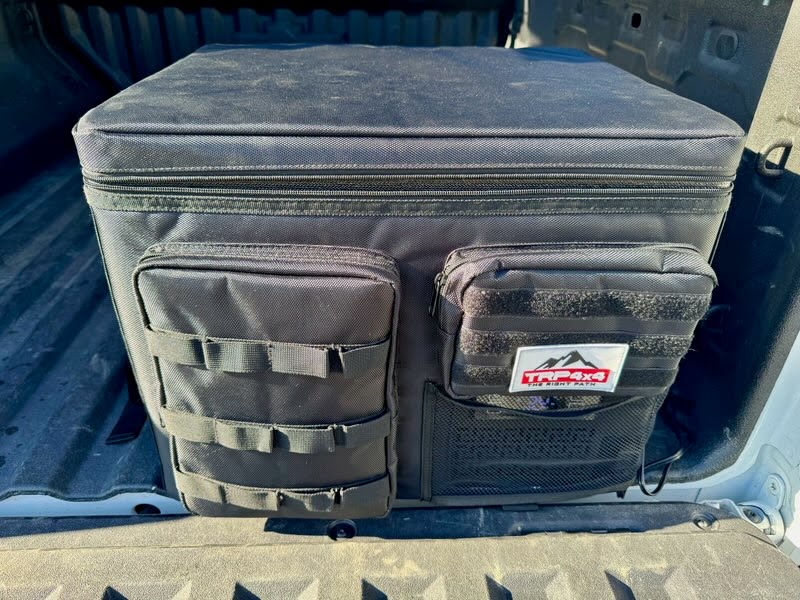
The TRP 4×4 Mammoth is 15 lbs. You lift it one-handed from your garage to the trailhead. After loading 40L of food, it is still lighter than an RTIC cooler packed with ice.
The EPP shell feels different from metal fridges, but do not let the material fool you. On a Sierras run, we threw this thing around. It absorbed bumps, vibration, and shifting loads across rough fire roads without showing a mark. Meanwhile, the insulation performed well enough that the compressor barely cycled at night, even with wide temperature swings between daytime sun and freezing overnight lows.
Temperature precision is where it earns its keep. You set 38°F for fresh produce or drop to 0°F for frozen meat. Either way, it holds. At $450, the Mammoth is not the cheapest option, but you are not paying extra for slides and brackets like you would with competitors. It is one piece, ready to go. So far in testing, this is the lightest portable fridge for car camping I have ever run, and it is crushing expectations.
Premium Pick: ICECO VL45 ($559)
The ICECO VL45 uses a SECOP compressor (the same brand found in Dometic and ARB fridges) inside a heavy-duty metal housing. It is heavier and more expensive, but the SECOP compressor is widely regarded as the most reliable unit in the portable fridge market. If you want a fridge built to last 10+ years of hard use, the ICECO is the premium pick. We covered this model in depth in our ICECO VL45 review.
Best Coolers (If a Portable Fridge Is Overkill)
The RTIC 45 Hard Cooler ($239) delivers 80-90% of YETI’s ice retention at a significantly lower price. For casual campers doing 4-6 weekends per year, it is the best value cooler on the market. Alternatively, the YETI Tundra 45 ($325) remains the gold standard for rotomolded coolers, with a thicker insulation wall and build quality backed by a five-year warranty.
TRP 4×4 Mammoth vs Traditional Coolers: Which Portable Fridge for Car Camping Wins?
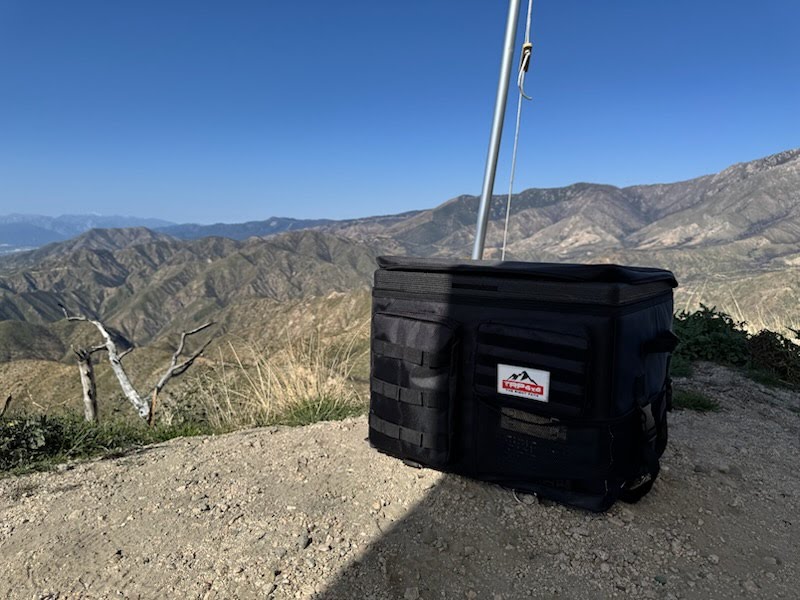
Since the TRP 4×4 Mammoth weighs the same as an empty RTIC 45 cooler (15 lbs), it offers the clearest weight comparison between a portable fridge and a traditional cooler.
Once you load 20 lbs of ice into a cooler, total weight jumps to 35+ lbs before food. The Mammoth loaded with 40L of food weighs roughly 30-35 lbs total, with no water sloshing around and no ice to restock. Because the EPP construction also eliminates the need for a fridge slide or mounting bracket (which typically adds $80-$150 and 5-10 lbs), the Mammoth’s real-world weight advantage over a traditional cooler setup is significant.
Temperature consistency is where the gap widens further. A YETI Tundra 45 starts at 32°F with fresh ice and slowly climbs toward 50°F over 48-72 hours. The Mammoth, on the other hand, holds whatever temperature you set (35°F, 20°F, 0°F) until you turn it off. For overlanders carrying fresh meat, dairy, or medication requiring specific temps, this level of consistent cooling is not negotiable.
Pros and Cons of Each Approach
Portable Fridge Pros
- Precise digital temperature control (0°F to 50°F)
- Zero ice cost saves $140+/year for regular campers
- Food stays dry, organized, and safe for days
- Full cargo capacity (no space lost to ice)
- Freeze capability for ice cream, frozen meals, and meat storage
- Models like the TRP Mammoth weigh only 15 lbs (lighter than a loaded cooler)
- Runs indefinitely with solar or vehicle power
Portable Fridge Cons
- Higher upfront cost ($230-$560 vs $50-$325 for coolers)
- Requires a power source (vehicle battery, power station, or solar)
- Compressor noise is audible in quiet camp settings, especially at night
- Budget compressors are less reliable than SECOP or Danfoss units
- Condensation builds on the lid interior in humid conditions
Traditional Cooler Pros
- No power source needed, works anywhere
- Lower upfront cost ($50-$325)
- Zero mechanical parts, nothing to break
- Premium models (YETI, RTIC) are nearly indestructible
- Silent operation
Traditional Cooler Cons
- Ice costs $80-$150 per season for regular campers
- No precise temperature control (food safety risk in heat)
- Food sits in meltwater by day two
- Reduced usable space (30-40% goes to ice)
- No freeze capability
- Heavier when loaded with ice (35-45 lbs for a 45-quart)
Final Verdict
If you camp 8+ weekends per year, take trips longer than two nights, or regularly camp in hot climates, a portable fridge for car camping pays for itself within two seasons. The convenience of precise temperature control, dry food storage, and zero ice runs fundamentally changes how you eat and plan on the trail.
For a first portable refrigerator, the BougeRV 42Qt ($246) is the lowest-risk entry point. It performs well for the price, and even if your fridge dies in year three, you have still saved money compared to a cooler-plus-ice setup. However, if weight and portability matter to you, the TRP 4×4 Mammoth ($450) is the standout pick. At 15 lbs, it is the lightest 40L portable fridge for car camping I have ever tested, and the EPP construction keeps it efficient and durable without slides or brackets.
If you camp fewer than six weekends a year and stick to one or two-night trips, a traditional cooler is still the practical choice. Grab an RTIC 45 ($239) and call it done.
Either way, your cooling solution should match how you actually camp. Be honest about your trip frequency, trip length, and tolerance for ice runs, and the right answer becomes obvious.
Ready to Ditch the Ice?
TRP 4×4 Mammoth: 15 lbs. 40L. No Ice Ever.
The lightest 40L compressor fridge on the market. Built for overlanders who value flexibility and performance over bulk.
Frequently Asked Questions
How much ice does a cooler use per camping trip?
A 45-quart cooler typically needs 20-40 lbs of ice for a two to three-day trip, depending on ambient temperature and how often you open the lid. In summer heat (90°F+), plan on restocking ice daily. At $3-$5 per 10 lb bag, a three-day summer trip therefore costs $10-$15 in ice.
How long does a portable fridge for car camping run on a battery?
A typical 40L compressor fridge draws 1-2 amps per hour on average once at temperature. On a standard 60 Ah vehicle battery (with a low-voltage cutoff to protect your starter battery), you get roughly 10-15 hours of runtime. With a dedicated 100 Ah lithium battery, however, runtime extends to 2-3 days without charging. Adding a 100W solar panel makes the system self-sustaining for indefinite off-grid use.
Is a portable fridge for car camping worth the money?
Yes, if you camp regularly. At 15-20 trips per year with $7 average ice cost per trip, you spend $105-$140 annually on ice. A budget portable fridge like the BougeRV 42Qt ($246) therefore pays for itself within two seasons. Premium options like the TRP 4×4 Mammoth ($450) break even by season three while also delivering better food safety, zero meltwater, and full cargo capacity.
What size camping fridge should I get?
For solo or two-person trips, a 35-40L fridge covers 3-5 days of food. Families or groups of four should step up to 50-60L. Overlanders doing week-long trips often run a 40-45L car fridge for perishables plus a small cooler for drinks and overflow. Our food and prep space organization guide breaks down sizing by vehicle and trip length.
Do portable fridges drain your car battery?
Modern compressor fridges include built-in battery protection with adjustable low-voltage cutoff settings (low, medium, high). If the vehicle battery drops below a safe threshold, the fridge shuts off automatically. Because of this, battery drain is a solvable concern rather than a dealbreaker. For extended off-grid use, pair your portable fridge with a secondary lithium battery or portable power station.
What is the lightest portable fridge for car camping available?
The TRP 4×4 Mammoth weighs 15 lbs at 40L capacity, making it the lightest fridge in its size class by a wide margin. For comparison, the ICECO VL45 weighs approximately 42 lbs and the Dometic CFX3 45 weighs around 41 lbs. The Mammoth achieves its low weight through EPP (Expanded Polypropylene) construction instead of the metal housings used by most competitors.
Related Articles: TRP 4×4 Mammoth Freezer Fridge Review | Cooking and Food Storage Solutions for Overlanding | Best Diesel Heaters for Camping