


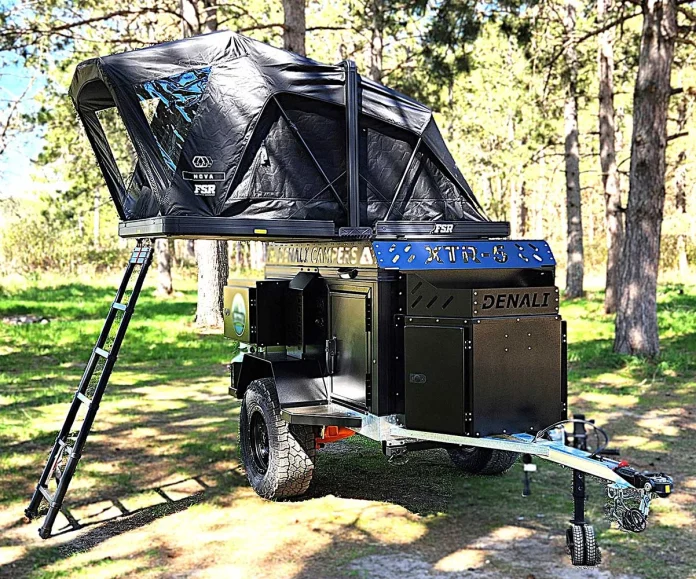

Most people think an off-road trailer rises or falls on storage space, tire size, or how the galley is laid out, but the real performance comes down to something far less glamorous: the suspension. When you leave pavement behind, the trailer becomes a moving extension of your tow vehicle. If it can’t keep up with terrain changes, you’re left fighting sway, bounce, and unpredictable handling that can derail a trip long before the campsite comes into view.
This is exactly why off-road suspension should be the first thing any overlander evaluates. A tough frame and big tires mean very little without a suspension system capable of absorbing impacts, maintaining stability, and protecting the gear you’re hauling. The Iron Peak Campers XTR-6 is a great example of how quality engineering transforms a trailer from a basic hauler into a trusted trail partner, and its suspension system highlights what modern adventurers should expect from their equipment.
Table of Contents
- The Real Job of an Off-Road Trailer Suspension
- Independent Suspension vs. Traditional Leaf Springs
- The Role of Articulation and Ground Clearance
- Case Study: Iron Peak Campers XTR-6 and Its Off-Road Suspension System
- Protecting Your Gear on Rough Terrain
- Handling, Safety, and Driver Confidence
- When to Upgrade Your Off-Road Trailer’s Suspension
- How Off-Road Suspension Expands Overlanding Possibilities
- FAQ
The Real Job of an Off-Road Trailer Suspension

Most people picture off-road suspension as something meant to smooth out a bumpy ride, but its role is far more technical. A trailer follows a tow vehicle through constantly changing terrain, and the suspension determines how well it maintains stability, keeps tires in contact with the ground, and absorbs the repeated impacts that come with trail driving. Without a properly engineered system, every rock, rut, and washout can introduce unpredictable behavior.
A good off-road suspension system acts as a protective layer between the terrain and the trailer’s frame. It manages weight transfer, reduces harsh impacts, and prevents excessive bouncing or bottoming out. This becomes especially important when the trailer is loaded with tools, recovery equipment, water, electronics, and other fragile essentials that shouldn’t be subjected to violent vibration.
Ultimately, off-road suspension is what makes the difference between a trailer you forget is behind you and one that constantly demands attention. As someone who’s spent plenty of miles towing both types, I can confidently say that quality suspension is the difference between enjoyment and fatigue on a long trip.
Independent Suspension vs. Traditional Leaf Springs
Leaf springs have been used for decades, and they’re dependable, but they aren’t ideal for the demands of off-road travel. They limit articulation, offer less control over wheel movement, and distribute impacts less efficiently. When the trail gets rough, a leaf-spring trailer is more likely to bounce dramatically or transfer shock into the frame and cargo.
Independent suspension systems solve these issues by allowing each wheel to move separately. This provides greater stability, increased traction, and a smoother ride through uneven terrain. Independent systems also help maintain better tire contact, which improves control and reduces sliding or hopping—two things every off-road driver has felt at some point when towing on rough ground.
The difference becomes especially noticeable on long washboard roads or trails with sudden obstacles. Independent off-road suspension provides more predictable handling and minimizes the “push” that can occur when a trailer with leaf springs hits a bump at an angle. Once you’ve towed a trailer with an independent system, it’s difficult to go back.
The Role of Articulation and Ground Clearance

Articulation is one of the most critical aspects of off-road suspension, yet it’s often misunderstood. In simple terms, articulation refers to the suspension’s ability to move and adapt to obstacles independently. When one wheel climbs over a rock or dips into a rut, the trailer stays level rather than tipping excessively or losing tire contact.
Ground clearance works hand-in-hand with articulation. Even the strongest suspension can’t perform well if the trailer drags, scrapes, or gets hung up on obstacles. A well-designed off-road suspension system makes it possible for the trailer to clear rocks, ruts, and ledges without damaging structural components or getting stuck in technical sections.
This combination of articulation and clearance provides stability, keeps the trailer aligned with the tow vehicle, and ensures gear remains protected inside. When you’re miles from the nearest road, these traits aren’t luxuries—they’re necessities.
Case Study: Iron Peak Campers XTR-6 and Its Off-Road Suspension System

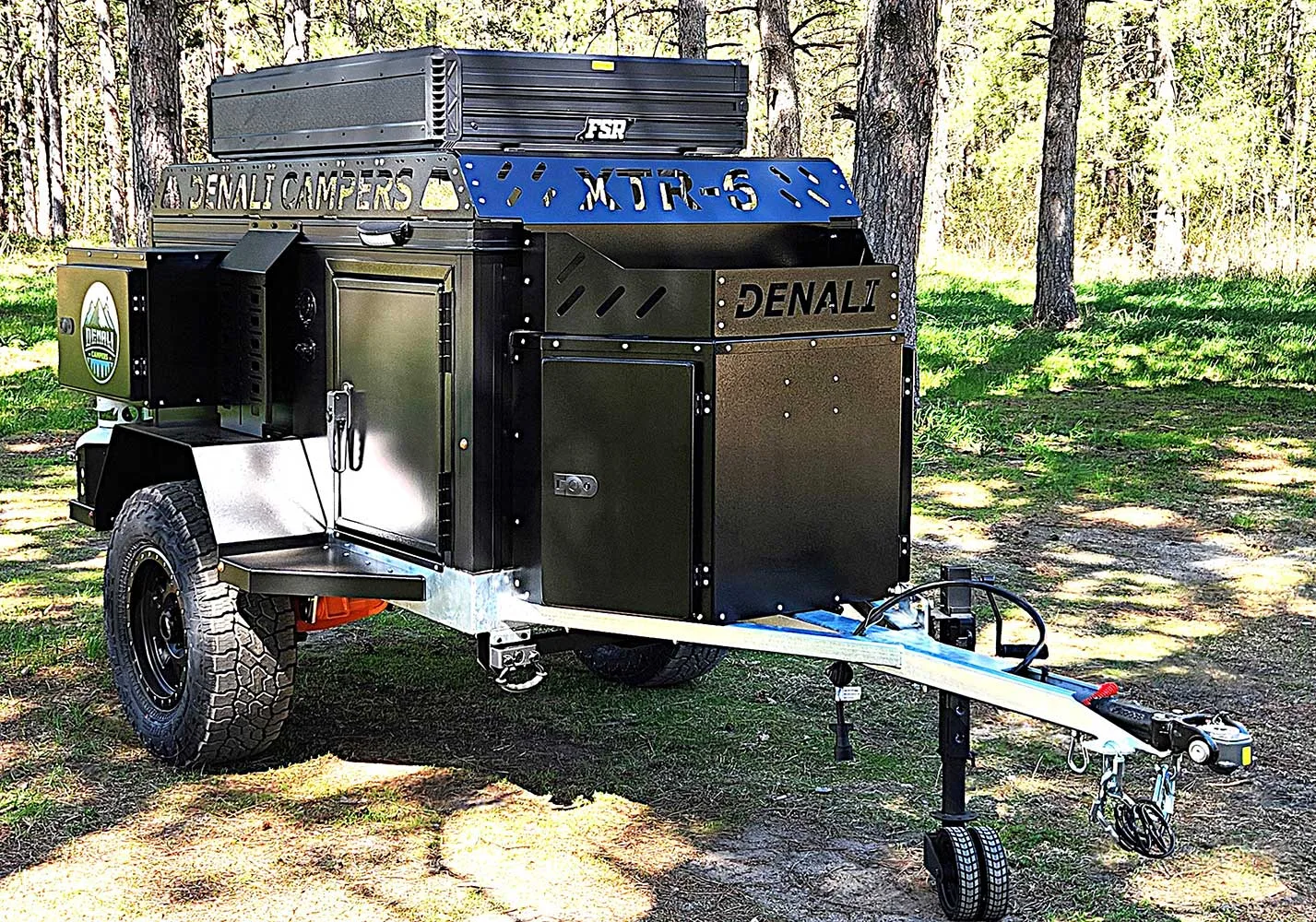
The Iron Peak Campers XTR-6 offers a practical example of what robust off-road suspension looks like in the real world. Built around a huck-fastened aluminum chassis, the XTR-6 uses Cruisemaster independent suspension, which is widely respected in the off-road community for its durability and smooth performance.
This system allows the XTR-6 to move confidently through technical terrain without bouncing or swaying excessively. When paired with the DO35 articulating hitch, the trailer maintains full motion in all directions, giving the tow vehicle freedom to maneuver without transferring stress into the frame.
On the trail, this setup feels natural and controlled. The trailer tracks behind the tow vehicle without lagging or jolting. Even when loaded with water, propane, tools, and camping gear, the off-road suspension system keeps everything stable and secure. It’s the type of setup that quickly builds trust because it performs the way you expect in unpredictable terrain.
Protecting Your Gear on Rough Terrain

A trailer can only be useful if the gear inside arrives intact. Off-road suspension plays a major role in keeping that gear safe. Without a high-quality system, items can shift, collide, or be damaged by repeated impacts. Sensitive items like electronics or cookware are especially vulnerable.
The XTR-6’s off-road suspension reduces vibration and impact forces, helping protect everything stored inside its 46 cubic feet of interior cargo space. This keeps tools organized, equipment stable, and food or water systems functioning properly. Even after long days on rocky trails, the internal setup remains undisturbed, which is exactly what overlanders need for multi-day or multi-week trips.
From personal experience, knowing the gear inside the trailer is protected lets you focus on the trail rather than worrying about what might be breaking behind you. That confidence is worth more than any accessory or add-on.
Handling, Safety, and Driver Confidence
The way a trailer behaves on rough roads directly affects safety. Without proper off-road suspension, a trailer can become unpredictable, especially on descents, washboard roads, or off-camber sections. Stability is essential for avoiding fishtailing or weight transfer that can throw off the tow vehicle’s balance.
Independent systems like those used on the XTR-6 promote smooth tracking. They reduce sway, dampen bounce, and help the trailer maintain a straight line even on uneven surfaces. This reduces driver fatigue and increases control, which becomes crucial on long travel days or in challenging environments.
A capable off-road suspension system also improves braking performance by keeping the trailer planted. This makes towing more predictable and reduces wear on both the trailer and the tow vehicle’s braking systems.
When to Upgrade Your Off-Road Trailer’s Suspension
Even if a trailer performs well on basic forest roads, more technical trails often reveal weaknesses. Excessive bounce, uneven tire wear, sway at speed, and poor tracking are all signs that an upgrade might be needed. These issues not only reduce comfort but also create long-term durability concerns.
For trips involving heavy loads, long distances, or rocky terrain, upgrading to a robust off-road suspension system is one of the most effective improvements. It helps stabilize weight, protects cargo, and reduces the chance of structural damage. It also opens up new destinations by allowing more technical trails to be explored safely.
For many overlanders, the easiest solution is choosing a trailer already built with a strong suspension platform, such as the Iron Peak Campers XTR-6. This avoids piecemeal upgrades and provides confidence right from the start.
How Off-Road Suspension Expands Overlanding Possibilities

At the end of the day, off-road suspension is what allows a trailer to go where the adventure leads. It opens access to routes that would be off-limits with a traditional system and enables longer, more remote trips without compromising safety or gear integrity. This increases the potential for exploration and supports a more enjoyable travel experience.
With the right suspension, a trailer becomes a true asset rather than a burden. It can carry more gear, withstand tougher environments, and follow the tow vehicle wherever it goes. For anyone growing more ambitious with their trips, this capability becomes priceless.
As trailers like the Iron Peak Campers XTR-6 show, the right off-road suspension transforms a simple gear hauler into a reliable expedition partner. It’s an investment in freedom, capability, and long-term durability on every mile of the trail.
FAQ
Why is off-road suspension more important than standard trailer suspension?
Off-road suspension is engineered to absorb impacts, increase stability, and maintain wheel contact on uneven terrain, making it essential for safe and reliable backcountry travel.
How does independent suspension improve off-road performance?
Independent suspension allows each wheel to move separately, increasing traction, reducing bounce, and improving stability when navigating uneven or technical terrain.
Can off-road suspension protect the gear inside my trailer?
Yes. High-quality off-road suspension reduces vibration and shock transfer, helping protect tools, equipment, and fragile items stored inside the trailer.
Does ground clearance relate to suspension design?
Ground clearance is influenced by suspension geometry and travel. A well-designed off-road suspension increases clearance and helps the trailer avoid obstacles.
Is an articulating hitch enough without good suspension?
No. An articulating hitch improves movement between the tow vehicle and trailer, but it must be paired with strong off-road suspension for full performance and safety.
Just so you know, some of the cool stuff we mention comes with affiliate links, meaning we earn a commission if you buy (no extra charge to you!). Plus, we occasionally feature sponsored content, but rest assured, we only shout out products we genuinely stand behind.