


Quick Verdict: After testing cots on overlanding trips for the past several years, the Byer of Maine Easy Cot XL ($149) is the one I keep reaching for. It sets up in seconds with zero assembly, sleeps wide at 31 inches, and holds 330 lbs without sagging. If you need a budget option, the Coleman Trailhead II at $54 is hard to beat for the price. For couples, the KingCamp Queen ($229) fits two adults on a 55-inch sleeping surface with a 550 lb combined capacity.
Last updated: March 2026 | 12 min read
In This Review
- Why Every Overlander Needs a Cot
- How We Tested These Cots
- Best Overall: Byer of Maine Easy Cot XL
- Best Budget: Coleman Trailhead II
- Best Heavy Duty: Teton Sports Outfitter XXL
- Best for Couples: KingCamp Queen Size
- Best Ultralight: ALPS Mountaineering Ready Lite
- Best Premium: Helinox Cot One Convertible
- Side-by-Side Comparison
- Buying Guide: What to Look For
- Pros and Cons
- Final Verdict
- Frequently Asked Questions
| Top Pick | Best Budget | Best Heavy Duty | Best Premium | |
|---|---|---|---|---|
| Product | TOP PICK Byer of Maine Easy Cot XL Byer of Maine Easy Cot XL |  Coleman Trailhead II Coleman Trailhead II |  Teton Outfitter XXL Teton Outfitter XXL | 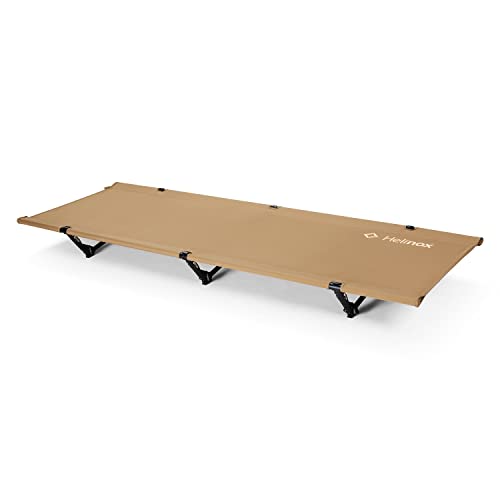 Helinox Cot One Helinox Cot One |
| Rating | ★★★★☆ 4.6 1,200 ratings | ★★★★☆ 4.4 24,900 ratings | ★★★★☆ 4.5 4,500 ratings | ★★★★☆ 4.6 100 ratings |
| Capacity | 330 lbs | 300 lbs | 600 lbs | 320 lbs |
| Sleep Surface | 78 x 31 in | 76 x 25 in | 86 x 45 in | 75 x 27 in |
| Weight | 21 lbs | 18 lbs | 26 lbs | 4.8 lbs |
| Price | $153.95 as of Oct 27, 3:24 pm | $149.99 as of Oct 27, 1:39 pm | $399.95 as of Oct 27, 1:39 pm | |
| Check Price → | Check Price → | Check Price → | Check Price → |
Why Every Overlander Needs a Camping Cot
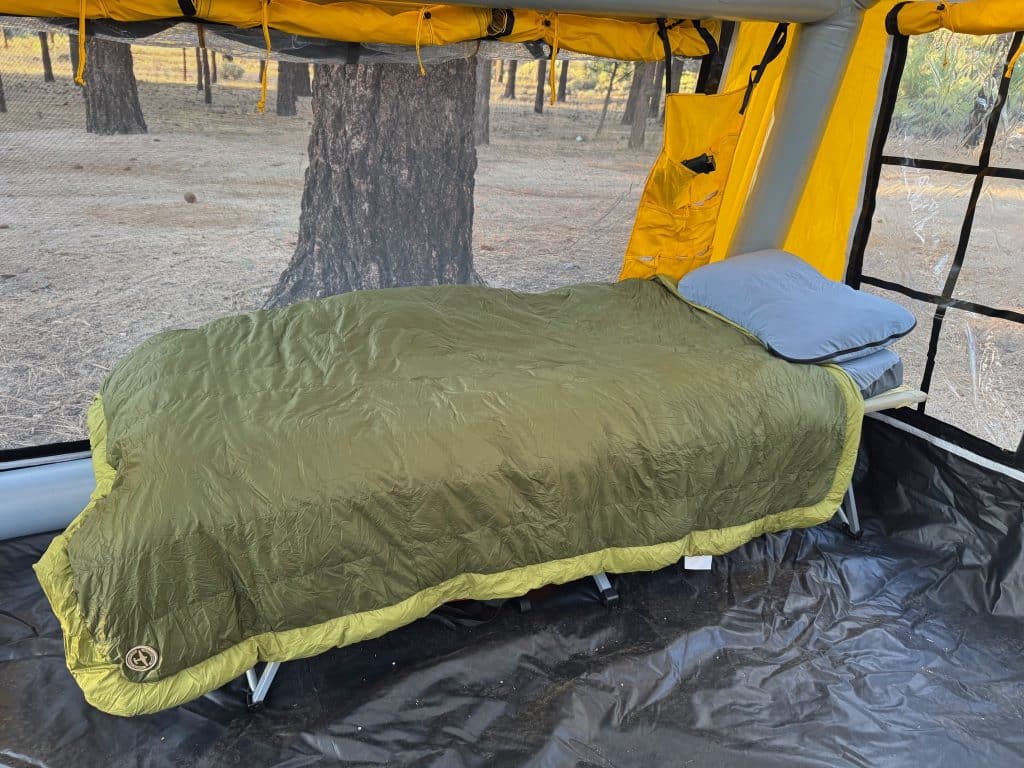
A good cot changes how you sleep outdoors. I learned this the hard way after years of waking up stiff on air mattresses and foam pads during overlanding trips across the Southwest. The first night I slept on a proper elevated sleeping platform, I woke up feeling like I’d slept in an actual bed. Cold ground stopped stealing heat. No more hip pain from rocks pressing through a deflated pad at 3 AM.
For overlanders and car campers, a portable camping cot makes sense because you have the vehicle space to carry one. You’re not counting ounces like a thru-hiker. Instead, you’re driving to camp, setting up a base, and staying for days. In this scenario, the extra 15 to 25 lbs pays for itself when you’re sleeping 17 inches off the ground with airflow underneath and gear storage below.
I’ve tested portable camping cots for adults over the past several years, rotating through different models on trips from Joshua Tree to the Ozarks. Some held up. Others sagged after a week. A few surprised me with comfort I didn’t expect at their price point. This guide covers the six I recommend, based on hands-on experience and hundreds of nights sleeping off the ground. If you want broader sleeping gear options, check out our best camping beds roundup.
How We Tested These Cots
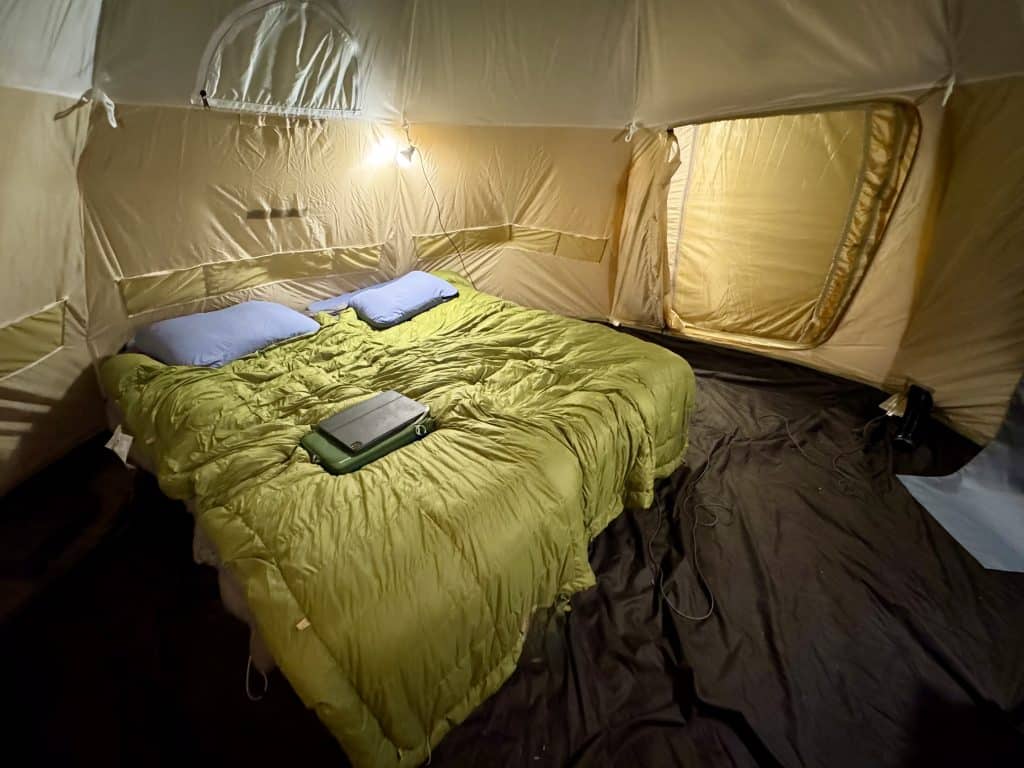
Testing means sleeping on them repeatedly in real conditions, not unboxing them in a garage and writing a review the same afternoon. My three personal picks (Byer of Maine, KingCamp, and Coleman) have logged dozens of nights each across multiple seasons. I’ve set them up on gravel, packed dirt, sand, and uneven forest floors. Similarly, I’ve slept on them in 95-degree desert heat and 28-degree mountain mornings.
For each model, I evaluated five things: setup time and difficulty, sleeping comfort over consecutive nights, durability after repeated use, packed size relative to vehicle storage, and value at the price point. The three additional picks (Teton, ALPS, Helinox) are included based on thorough spec analysis and verified user feedback across thousands of Amazon reviews. I’ve noted clearly which ones I’ve personally tested versus which are spec-based recommendations.
Specifically, I paid attention to fabric tension after multiple setups (some models sag permanently), frame noise when rolling over at night, and how each performs on uneven ground. These are details you only learn after weeks of use, not from a single overnight test. For more on dialing in your sleep setup, our guide on how to make tent camping more comfortable covers the full picture.
Best Overall: Byer of Maine Easy Cot XL ($149)
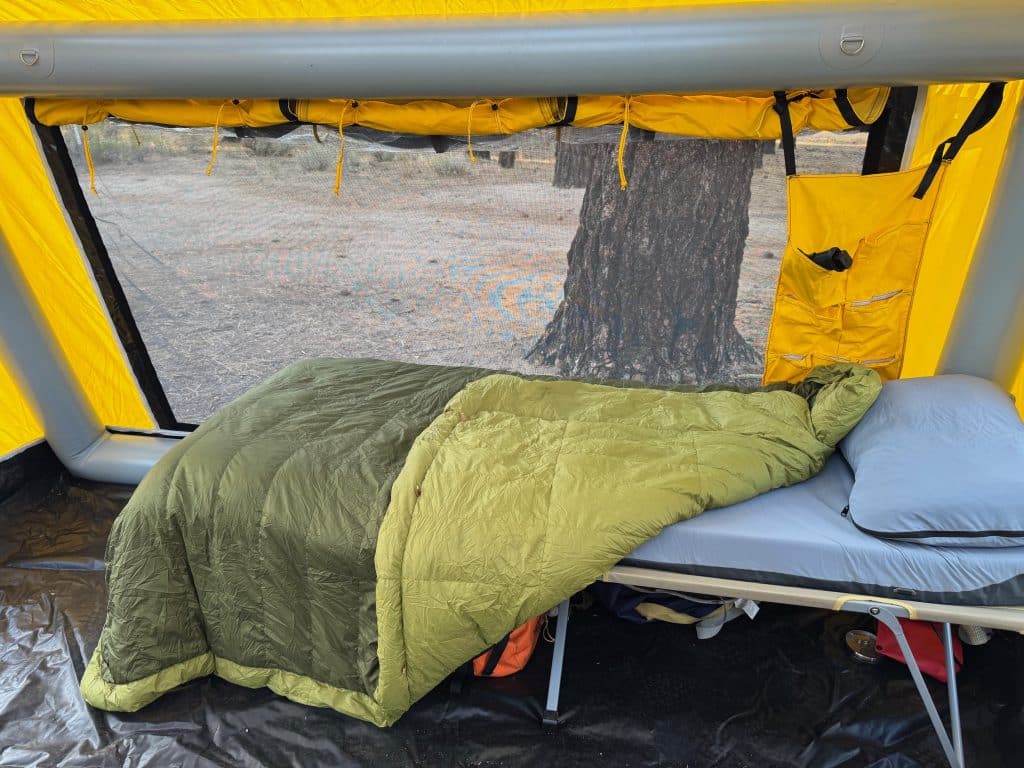
The Byer of Maine Easy Cot XL is the camping cot I use more than any other. It’s been my go-to for overlanding trips since I first tested it, and after years of use, the fabric tension hasn’t changed. No sagging. No loose spots. The 600 Denier polyester canvas still feels as taut as day one.
What sold me originally was the zero-assembly setup. You unfold it, flip the legs down, and you’re done. Zero end bars to wrestle into place. No clips to force together. In a dark campsite after 10 hours of driving, this simplicity matters more than any spec sheet tells you. Setup takes roughly 15 seconds, and breakdown is equally fast.
BYER OF MAINE Easy Cot, 330 lb, Extra Large Folding Cot, Bed for Adults
Zero-assembly folding cot with a wide, welded-steel platform rated to 330 lbs.
- Unfold-and-flip setup in about 15 seconds
- 31-inch width lets side sleepers shift positions
- 600 Denier canvas stays taut after years of use
- 18-inch height leaves real storage space underneath
- At 21 lbs it stays with the vehicle
- Firm canvas surface begs for a thin pad on top
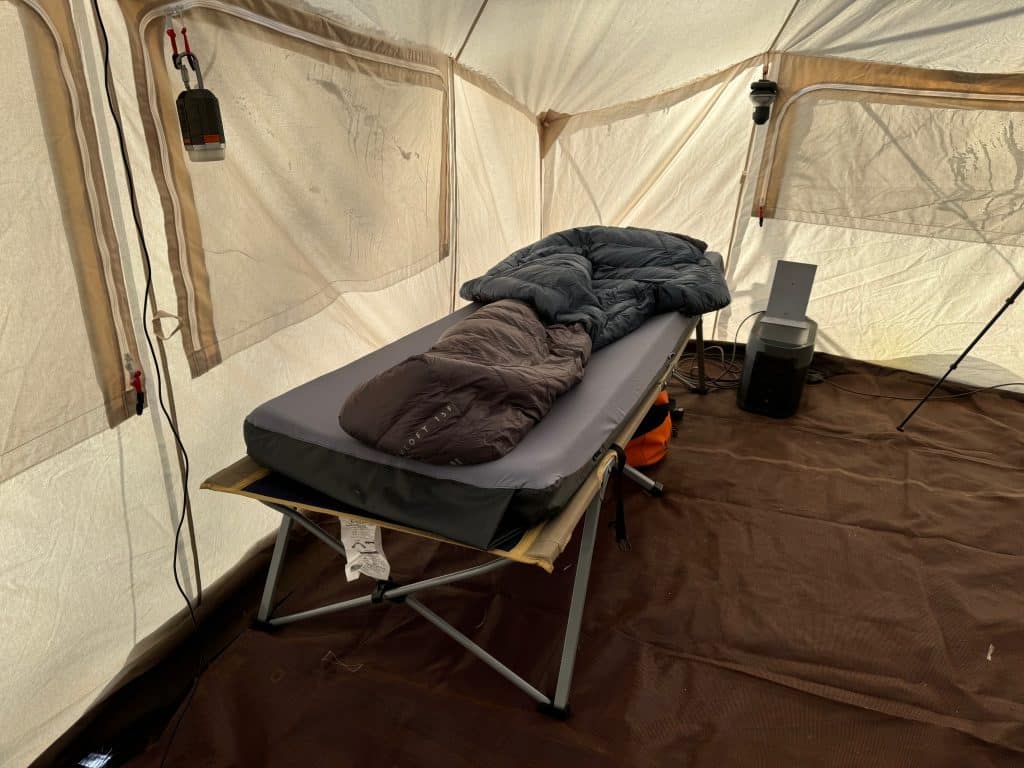
The 31-inch width is notably wider than most folding camping cots in this price range. I’m a side sleeper, and on narrower 25-inch models, my shoulders hang over the edge. On the Byer, I have room to shift positions without feeling like I’m about to roll off. Its welded steel frame holds 330 lbs with no flex, and the 18-inch height leaves plenty of room underneath for boots, a gear bag, or a cooler.
The trade-off is weight. At 21 lbs, this is a car camping and overlanding solution, not a backpacking one. You’ll also want a sleeping pad on top; the canvas sleeps firm, which I prefer, but some people want more cushion. For my money, firm and flat beats a saggy surface every time.
Best Budget Pick: Coleman Trailhead II ($54)
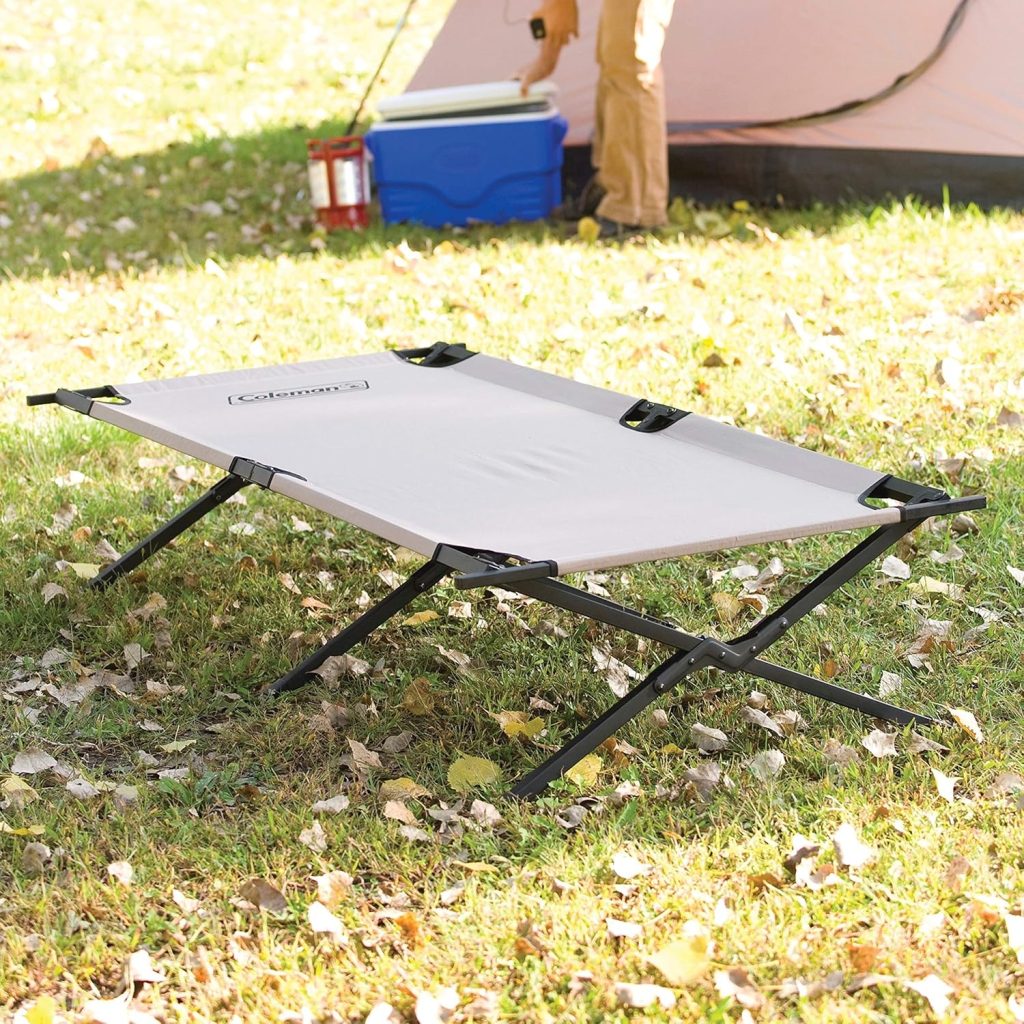
The Coleman Trailhead II is the best camping cot for anyone who wants to try sleeping elevated without spending $150 or more. At $54, it costs less than most sleeping pads, and it delivers solid performance for casual weekend trips.
I bought the Trailhead II as a loaner for friends joining group trips. After using it myself on several occasions, I was impressed by the sleeping surface at this price point. The steel X-frame design keeps it stable on uneven terrain. Consequently, it doesn’t wobble or rock when you shift positions at night. The attached side pockets for a headlamp and phone are a nice touch you don’t see on models at triple the price.
Coleman Trailhead II Large Folding Cot with Easy Setup & Takedown, Supports Adults up to 6ft 2in or 300lbs, Great for Camping, Lounging, Elevated Sleeping, Guests, & More
A legitimate steel-frame cot that handles casual weekend trips without fuss.
- Steel X-frame stays stable on uneven ground
- Attached side pockets hold a phone and headlamp
- Folds down to fit most car trunks
- End bars fight you during the first few setups
- 25-inch width feels tight for side sleepers
However, setup is the weak point. The end bars require significant force to clip into place, especially when new. In cold weather, the fabric stiffens and makes this process harder. Plan on 3 to 5 minutes the first few times. After the fabric loosens from use, though, assembly gets easier.
At 300 lbs capacity and 76 inches long, the Trailhead II works for most adults up to about 6’1″. Taller sleepers will feel the end crossbars against their feet. Meanwhile, the 25-inch width is narrower than the Byer of Maine, so larger-framed sleepers should consider sizing up. Still, for $54, you get a legitimate folding camping cot built on a steel frame. It’s the easiest recommendation on this list for budget-conscious campers.
Best Heavy Duty: Teton Sports Outfitter XXL ($199)
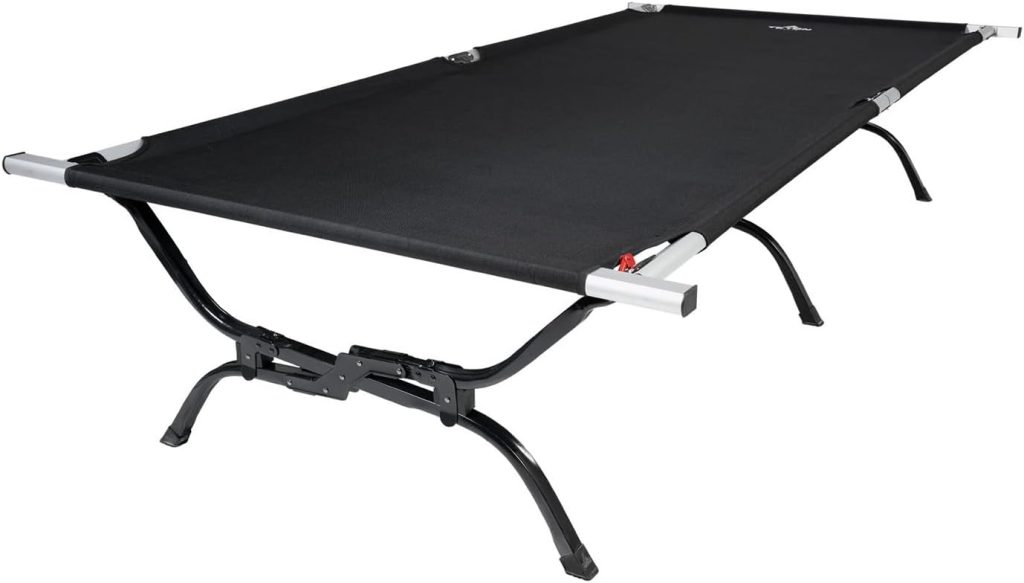
I haven’t tested the Teton Outfitter XXL personally, so I’ll be upfront about it. What the specs tell me is they’re impressive for larger campers who need a camping cot with serious weight capacity. At 600 lbs, it handles more than any other single-person option in this roundup, nearly double the Coleman and Byer of Maine.
Teton Outfitter Camping Cot, Heavy-Duty Oversized Folding Cot for Adults, Comfortable Elevated Sleeping Bed, Easy Setup, XXL
The strongest single-sleeper cot in this roundup, sized for big and tall campers.
- 600 lb capacity doubles most single cots
- Sleeping surface outsizes a standard twin mattress
- Patented pivot arm takes the fight out of end bars
- 19.5-inch height gives the most under-cot storage
- Heaviest pick at 26 lbs
- Packs down long, so it eats cargo space
Size and Sleep Surface
The sleeping surface measures 86 inches long by 45 inches wide. For reference, a standard twin mattress is 75 by 38 inches. So you get 11 extra inches of length and 7 extra inches of width. As a result, tall sleepers (6’3″ and above) and broad-shouldered adults finally have a camping cot fitting them properly.
Teton’s patented pivot arm system reportedly makes end bar assembly easier than traditional clip-in designs. Similarly, the 600D Oxford canvas resists sagging even under heavy loads according to user reviews, and the S-leg steel frame distributes weight across multiple contact points. At 19.5 inches off the ground, it also provides the most under-cot storage space of any model reviewed here.
Trade-Offs to Consider
On the other hand, the Teton weighs 26 lbs, making it the heaviest pick. It also packs down to 45 inches long, which takes up more vehicle space than compact models. Some Amazon reviewers report the end bars detach when lifting or moving it, so plan to set it up where you intend to sleep.
For hunters, truck campers, and anyone over 250 lbs, the Teton Outfitter XXL looks like the obvious choice based on specs and thousands of positive reviews. I’d want to put a few nights on one before giving a definitive stamp, but the numbers speak for themselves.
Best for Couples: KingCamp Queen Size ($229)
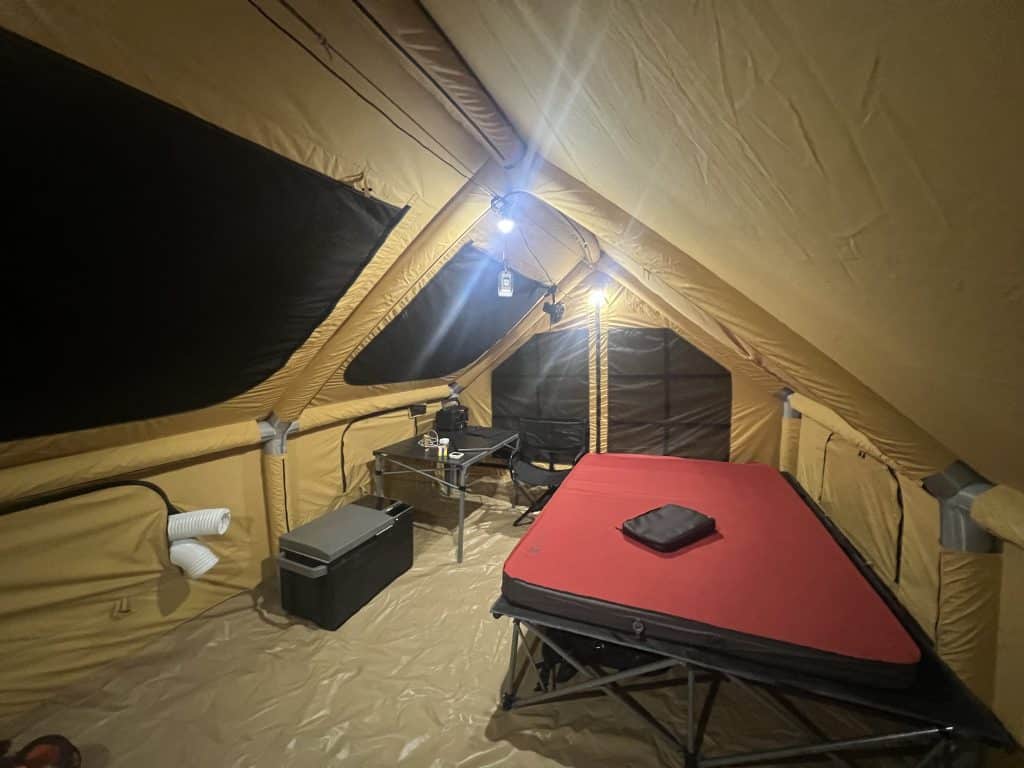
The KingCamp Queen is the only queen size camping cot in this roundup, and for couples who camp together, it solves a real problem. Two separate setups take up double the floor space in a tent. Instead, the KingCamp fits both sleepers on a single 82.6-inch by 55-inch surface with a combined 550 lb capacity.

KingCamp 2 Person Queen Size Camping Cot, Folding Portable Double 550lbs Heavy Duty Oversized Large Wide XXL Foldable Sleeping Bed with Carry Bag for Two Adult Outdoor Travel Tent, Grey
A queen-size folding cot that turns a tent into a real bed for two.
- 55-inch surface sleeps two adults side by side
- 1200D Oxford fabric is the toughest in this roundup
- Wheeled carry bag rolls from truck to tent
- Corner straps lock an air mattress in place
- Center support rail is noticeable when sleeping solo
- Unfolding it is a two-person job
Build Quality and Setup
I’ve used the KingCamp on multiple couple’s trips, and the one-action folding system is legitimately fast. Pull it out of the wheeled carry bag, unfold it, and the nine-leg support structure locks into place. The Q195 steel tubing frame feels overbuilt for the price point. Similarly, the 1200D tear-resistant Oxford fabric is the toughest material of any option reviewed here, nearly double the Denier rating of the Byer of Maine.
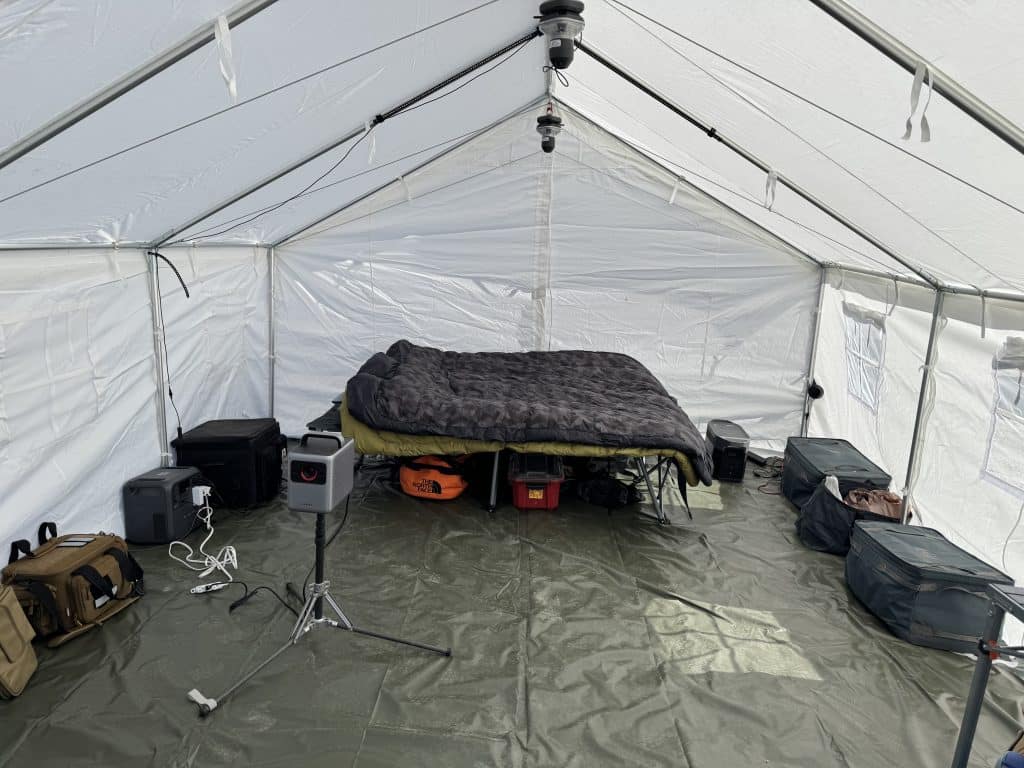
The wheeled carry bag is a smart design choice because this one is heavy. At 35.3 lbs, plus the bag, you’re moving close to 40 lbs total. For car camping and overlanding, though, the wheels solve the problem. You roll it from truck to tent instead of carrying it. The four-corner elastic bandage system also secures an air mattress on top, which I recommend for couples wanting hotel-level comfort at camp.
What to Watch Out For
One notable downside is the center support rail. When sleeping solo, you’ll feel the rail running down the middle. For two people sleeping side by side, however, each sleeper stays on their half and the rail isn’t noticeable. Note: one person will have a hard time unfolding it alone; it’s a two-person setup job. Despite this quirk, for couples heading out on car camping trips, the KingCamp Queen delivers real bed comfort at a campsite price.
Best Ultralight: ALPS Mountaineering Ready Lite ($299)
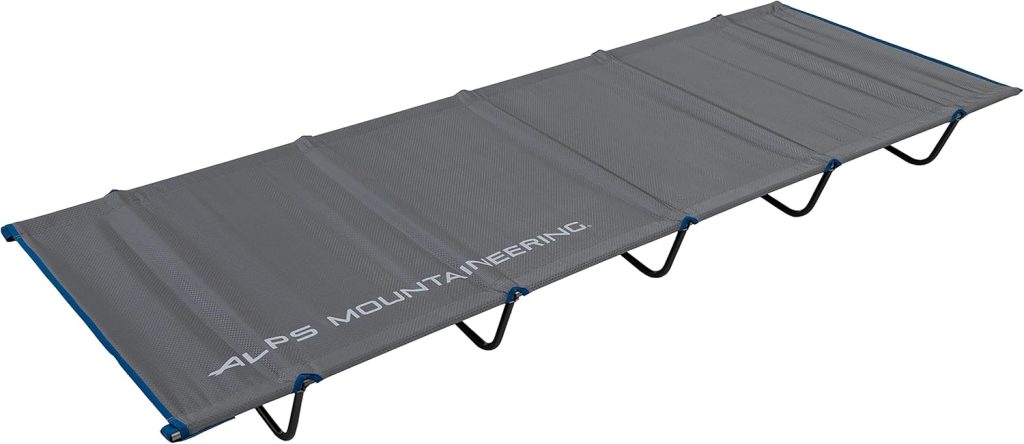
Full disclosure: I haven’t slept on the ALPS Ready Lite yet. But at 5 lbs, the weight alone tells a compelling story. For perspective, the Coleman Trailhead II weighs roughly 18 lbs. The Byer of Maine weighs 21 lbs. If weight and packability are your top priorities, this portable camping cot sits in a completely different category.

ALPS Mountaineering Ready Lite Cot - Charcoal/Blue
A tent-pole-style cot that packs small enough to strap to a backpack.
- Weighs 5 lbs yet still carries 300 lbs
- Packs to 18 x 3 x 8 inches
- 7000 Series aluminum shock-corded frame
- Two-layer sleeve keeps an air pad from sliding off
- Only 6 inches of ground clearance, so no storage below
- Leg assembly takes practice at first
Frame and Construction
ALPS built the frame from 7000 Series aluminum, which is the same alloy family used in aerospace and high-performance bicycle frames. The shock-corded pole construction means setup follows the same logic as assembling a tent: thread the poles through the sleeves, snap them into place, done. Because of this design, the packed size is only 18 by 3 by 8 inches, small enough to strap to the outside of a backpack.
The two-layer sleeve design also accommodates air pads up to 2 inches thick, which keeps your pad from sliding off during the night. At 78 inches long and 28 inches wide, the sleeping surface fits most adults comfortably. The 300 lb weight capacity matches the Coleman despite weighing one-quarter as much.
Ground Clearance and Limitations
Because the Ready Lite sits only 6 inches off the ground, it feels more like a tensioned platform than a traditional elevated setup. As a result, you won’t get the under-cot storage space of taller models. The metal leg assembly also requires pressing pieces together firmly, which takes practice according to reviewers. After a few setups, though, the process becomes second nature.
For overlanders who also backpack, hike to remote sites, or need to save every pound of vehicle payload, the ALPS Ready Lite appears worth the premium over heavier alternatives. It packs down smaller than a Kamp-Rite tent cot carry bag, which says a lot about its portability.
Best Premium: Helinox Cot One Convertible ($499)
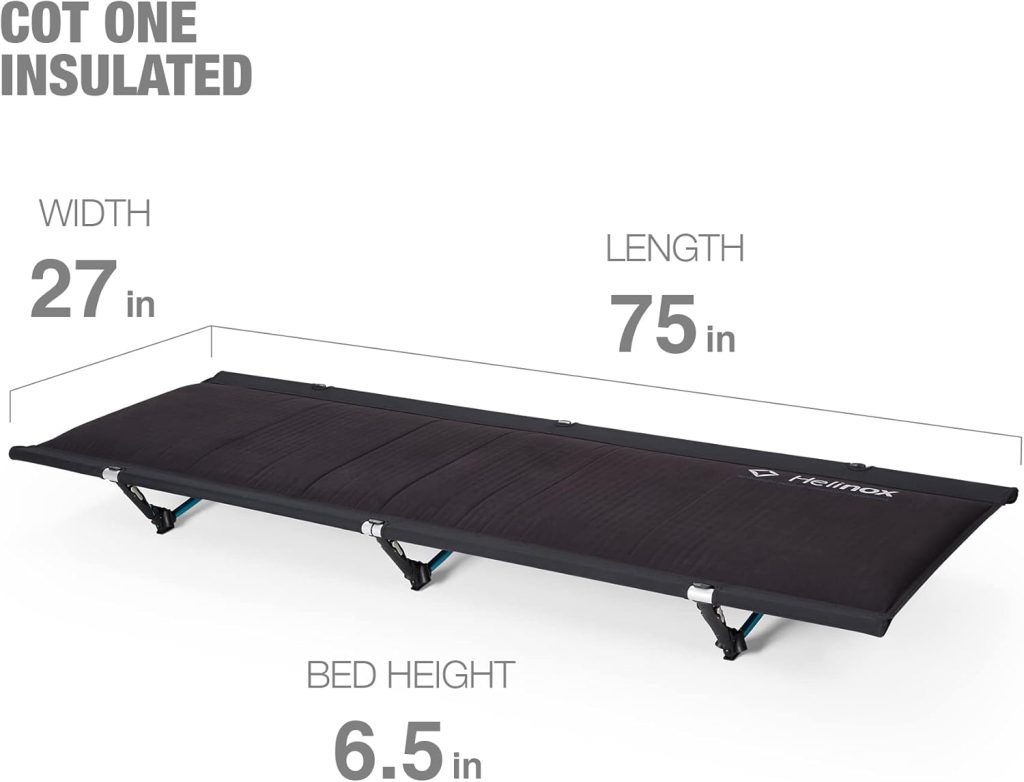
Let me be direct: $499 is a lot of money for a camping cot. I haven’t tested the Helinox personally, so I’m working from specs, build details, and extensive user reviews. After examining what you get for the price, though, the Helinox starts to make sense for a specific type of buyer.
Helinox Cot One Lightweight, Compact, Collapsible, Portable Camping Cot, Regular, Coyote Tan
A convertible DAC-aluminum cot that moves between backpacking and base camp duty.
- Lightest full-size option here at under 5 lbs
- DAC aluminum frame with tool-free lever locks
- Optional leg extensions convert it to car-camping height
- Bluesign-certified recycled polyester deck
- Leg extensions are sold separately
- Small contact points can press into soft ground and tent floors
Premium Build and Weight
Helinox uses DAC aluminum alloy frames with proprietary nylon resin hubs. These are the same construction principles behind their iconic camp chairs. As a result, the entire unit weighs only 4 lbs 13.5 oz, making it the lightest option reviewed while still holding 320 lbs. The lever-lock system also enables tool-free setup in approximately 3 minutes and breakdown in 1 minute. Zero end-bar wrestling. No clip forcing.
The Convertible Advantage
The “convertible” feature is what sets this apart. At its base height of 6.5 inches, it functions as an ultralight backpacking setup. With optional leg extensions (sold separately), however, it rises to 15 inches for traditional car camping height. This versatility means one camping cot serves both roles instead of buying two. The bluesign-certified recycled polyester fabric also meets sustainability standards while delivering a flat, supportive sleep surface.
Is It Worth $499?
There are valid reasons to pass on the Helinox, though. The six small contact points press into soft ground and risk damaging tent floors. Without insulation underneath, it sleeps cold below 40 degrees, so you’ll need a pad regardless. The leg extensions cost extra on top of the $499 base price.
For overlanders who demand the absolute best camping cot and plan to use it year-round across multiple camping styles, the Helinox One Convertible sits at the top. Everyone else should consider the Byer of Maine, which delivers 90% of the comfort at 30% of the price. When it comes to cold-weather considerations, see our winter camping gear guide.
Side-by-Side Comparison
| Model | Price | Weight | Capacity | Sleep Surface | Height | Best For |
|---|---|---|---|---|---|---|
| Coleman Trailhead II | $54 | ~18 lbs | 300 lbs | 76″ x 25″ | 17″ | Budget buyers |
| Byer of Maine Easy XL ⭐ | $149 | 21 lbs | 330 lbs | 78″ x 31″ | 18″ | Most overlanders |
| Teton Sports XXL | $199 | 26 lbs | 600 lbs | 86″ x 45″ | 19.5″ | Larger adults |
| KingCamp Queen | $229 | 35.3 lbs | 550 lbs | 82.6″ x 55″ | 18.9″ | Couples |
| ALPS Ready Lite | $299 | 5 lbs | 300 lbs | 78″ x 28″ | 6″ | Backpackers |
| Helinox One Convertible | $499 | 4.8 lbs | 320 lbs | 75″ x 27″ | 6.5″/15″ | Premium buyers |
Buying Guide: What to Look For

Weight Capacity
Always buy a camping cot rated for at least 50 lbs above your body weight. You’re not lying perfectly still all night. Rolling over, sitting up, and getting in and out creates momentary force spikes above your static weight. A 200 lb person should look at 250 lb minimum capacity. For this reason, the Teton’s 600 lb rating provides the widest safety margin.
Sleeping Surface Size
Width matters more than length for most adults. A 25-inch wide surface forces you to sleep on your back with arms at your sides. Conversely, a 31-inch model (like the Byer of Maine) gives side sleepers room to bend their knees and shift positions. If you’re over 6’2″, make sure you pick something at least 80 inches long, or your feet will hang off the end.
Setup Difficulty
I’ve read hundreds of Amazon reviews across all six products, and the number one complaint is setup difficulty. End bars, crossbars, and tension clips fight you when new. This is true across brands and price points. The Byer of Maine eliminates this problem entirely with its unfold-and-flip design. Before purchasing any folding camping cot, watch a setup video so you know what you’re getting into.
Weight vs. Use Case
For overlanding and car camping, weight is a secondary concern. You’re loading it into a vehicle, not carrying it on your back. Therefore, prioritize comfort and durability over saving a few pounds. If you also backpack or hike to remote campsites, the ALPS Ready Lite (5 lbs) or Helinox (4.8 lbs) are the only realistic options. Everything else in this roundup weighs 18 lbs or more.
Ground Clearance and Storage
Higher models (17 to 19.5 inches) offer meaningful storage space underneath for boots, packs, and gear bins. Lower-profile options (6 to 6.5 inches) sit closer to the ground and provide less ventilation. In hot weather, airflow beneath your sleeping surface makes a noticeable difference in comfort. Check out our overlanding camp setup guide for more on organizing your sleep and gear space.
Pros and Cons
Pros of Sleeping on a Cot
- Elevates you 6 to 19.5 inches off cold, wet, or rocky ground
- Under-cot storage keeps gear organized and accessible (on taller models)
- Provides a flat, firm sleeping surface without air loss overnight
- No inflation needed; setup is mechanical, not dependent on pumps or lung power
- Steel and aluminum frames last years without degrading (unlike air mattress seams)
- Options from $54 to $499 fit every budget and use case
- Double-wide options exist for couples (KingCamp at 55 inches wide)
Cons of Sleeping on a Cot
- Heavier than air mattresses and foam pads (18 to 35 lbs for car camping models)
- Larger packed size takes more vehicle space than a rolled sleeping pad
- Most models need a sleeping pad on top for insulation and cushion
- End bar assembly is difficult on many folding designs
- Narrower models (25 inches) restrict movement for side sleepers
- Low-profile ultralight options (6 inches) don’t provide storage underneath
Final Verdict
The best camping cot for most overlanders and car campers is the Byer of Maine Easy Cot XL at $149. It eliminates the most common frustration (difficult assembly) while delivering a 31-inch wide sleeping surface on a welded steel frame. After years of use on my own trips, the fabric tension remains unchanged and the frame shows zero signs of fatigue. For the overlander who wants a reliable, comfortable sleeping platform without overthinking the purchase, this is it.
If you’re on a tight budget, the Coleman Trailhead II at $54 gets you off the ground on a steel frame for the cost of a restaurant dinner. It has assembly quirks, and it’s narrower than the Byer, but the value is unmatched. I keep one as a loaner for friends, and every person who’s slept on it has asked where to buy one.
For couples, the KingCamp Queen at $229 is the only real option at this price point. The 55-inch width and 550 lb combined capacity handle two adults comfortably, and the wheeled carry bag makes transport painless. Meanwhile, larger adults (250+ lbs or 6’3″+) should go straight to the Teton Outfitter XXL at $199 for its 600 lb capacity and oversized 86-inch by 45-inch surface.
The ultralight segment comes down to budget. At $299, the ALPS Ready Lite weighs 5 lbs and packs smaller than a tent. Meanwhile, the Helinox One Convertible at $499 shaves a few more ounces and adds a convertible height system. Both are strong choices for weight-conscious buyers. Unless you need the convertible feature, the ALPS saves you $200 for a nearly identical weight profile.
Frequently Asked Questions
What is the best camping cot for adults over 250 lbs?
The Teton Sports Outfitter XXL supports 600 lbs, which is double the capacity of most models built for adults. Its oversized 86-inch by 45-inch sleeping surface also provides the most room for larger frames. For anyone over 250 lbs who needs a heavy duty option, it’s the clear choice.
Are camping cots more comfortable than air mattresses?
For most people, yes. A camping cot provides a flat, firm surface with no overnight deflation. Air mattresses lose pressure as temperatures drop, and you’ll often wake up partially on the ground by morning. I paired a cot with a thin sleeping pad years ago and haven’t gone back to an air mattress since.
What size do I need?
If you’re under 6’0″ and sleep on your back, a standard 75-inch by 25-inch model works fine. Side sleepers should look for at least 28 inches of width, ideally 31 inches. Anyone over 6’2″ needs an 80-inch or longer surface. The Teton XXL (86 inches) and KingCamp Queen (82.6 inches) offer the longest sleeping surfaces in this roundup.
Do I need a sleeping pad on top?
In warm weather (above 50 degrees), a cot alone works fine. Below 50 degrees, cold air circulating underneath will pull heat from your body. A foam or inflatable pad on top adds insulation and cushion. This is especially true for low-profile ultralight models like the ALPS and Helinox, which sit closer to the ground.
What is the best budget option under $100?
The Coleman Trailhead II at $54 wins this category hands down. It uses a steel X-frame design with 300 lb capacity and includes attached side pockets. Assembly takes practice, but once you’ve set it up a few times, it gets faster. No other option under $100 matches the Coleman’s build quality at this price.
Is a double-wide cot worth it for couples?
If you camp together regularly, one double-wide setup saves tent floor space compared to running two separate singles. The KingCamp Queen ($229) fits two adults on a 55-inch wide surface with a 550 lb combined capacity. Keep in mind, 55 inches is 5 inches narrower than a standard queen mattress at home, so you’re sleeping a bit closer together. The only other downside is the center support rail, which you’ll feel if sleeping solo.