


When you’re headed off-road, your trailer can either be your greatest asset or your biggest obstacle. The best overland trailers are more than just boxes on wheels. They’re purpose-built tools for adventure—designed to go where others can’t. One of the most important factors that determines how well your trailer performs in rough terrain is what’s happening underneath it.
Suspension and ground clearance directly impact trailer performance. They control how a trailer moves, handles obstacles, and keeps your gear safe. If you’ve ever tried pulling a basic utility trailer down a bumpy forest road, you know how quickly things can get dicey. But with the right setup—like the rugged and well-equipped SNO Trailers Alpine—you can conquer just about any trail.
Let’s take a closer look at how suspension and ground clearance shape trailer performance. While we’re at it, we’ll explore why the Alpine from SNO Trailers is a great example of smart design, built from the ground up to tackle tough terrain.
Table of Contents
- Why Suspension Matters for Trailer Performance
- The Role of Ground Clearance in Trailer Performance
- How Suspension and Ground Clearance Work Together
- Other Factors That Influence Trailer Performance
- Tips for Choosing an Off-Road Trailer
- What’s Underneath Your Trailer Matters
- FAQ
Why Suspension Matters for Trailer Performance

Suspension plays a huge role in how a trailer behaves when the road gets rough. A good suspension system absorbs impacts, smooths out the ride, and keeps your gear from being shaken to pieces. Without it, your trailer can bounce uncontrollably, sway dangerously, or worse—break down completely.
Traditional trailers often use leaf spring suspension. While strong and simple, leaf springs don’t offer much flexibility or comfort on uneven terrain. That’s where independent suspensions come in. Independent suspension systems allow each wheel to move on its own, giving the trailer much better articulation and traction.

As an example, the SNO Trailers Alpine comes standard with Timbren suspension, which delivers excellent load support while smoothing out bumps and jolts. If you want to push the limits, SNO Trailers offers an optional Fabtech long-travel suspension, complete with shocks and integrated brakes. This upgrade significantly improves handling and durability on more technical trails.
A well-designed suspension also helps prevent trailer sway, especially when navigating hills or uneven ground. Whether you’re cruising down washboard roads or crawling through rocky switchbacks, a smart suspension system improves trailer performance and gives you peace of mind.
The Role of Ground Clearance in Trailer Performance

Ground clearance is another critical part of the off-road puzzle. It refers to the distance between the lowest point of your trailer and the ground. The more clearance you have, the more capable your trailer is of passing over rocks, stumps, and deep ruts without getting hung up.
Trailers with low clearance can easily bottom out, damaging components like water tanks, axles, or the trailer frame itself. They’re also more likely to scrape, drag, or get stuck when transitioning between inclines and dips. Poor clearance can drastically reduce trailer performance and increase the risk of trail damage.
The SNO Trailers Alpine was designed with high-clearance in mind. It features a powder-coated steel frame, an aluminum body, and rides on 17″ Method wheels with 275/70/R17 all-terrain tires. This gives it serious lift and helps it match or exceed the ride height of most off-road tow vehicles. It even accommodates tires up to 40″ for those looking to level up.
With a 40-degree departure angle and a suspension load rating of 3,500 lbs, the Alpine easily clears steep hills and obstacles. That means fewer worries about scraping or getting stuck—and more time enjoying the trail.
How Suspension and Ground Clearance Work Together

Suspension and ground clearance are each important, but together, they form the foundation of true off-road capability. Good suspension absorbs terrain. Good clearance avoids it. When you have both, trailer performance improves dramatically.
A trailer with excellent suspension but low clearance might still drag over rocks or get stuck in ruts. On the flip side, a trailer with great clearance but stiff, outdated suspension might bounce dangerously or shake gear loose. Balance is key.
Again, the SNO Trailers Alpine is a great example of this balance. Its Timbren or optional Fabtech suspension works alongside its high-clearance chassis to create a smooth, stable ride. It maintains traction, handles uneven terrain with ease, and protects your gear from harsh impacts.
Other Factors That Influence Trailer Performance

While suspension and clearance are major factors, several other design elements also play a role in trailer performance.
Weight and weight distribution matter. A trailer that’s too heavy for your tow vehicle can be dangerous. Fortunately, the Alpine keeps things light at just 1,500 lbs dry weight, making it easy to tow even with a midsize SUV or truck. The compact 12’2″ length and 6’3″ width also help when maneuvering tight trails.
Construction materials impact both weight and durability. The Alpine’s powder-coated steel frame resists rust, while the aluminum body keeps the trailer light and tough. An optional spare wheel, utility box with recovery board mounts, and integrated SNORAC roof rack all add to its capability.
And then there’s storage and functionality. With a stainless-steel kitchen pullout, side storage boxes, cooler tray, and integrated MOLLE panels, the Alpine doesn’t just survive the trail—it makes life easier while you’re out there.
Tips for Choosing an Off-Road Trailer

If you’re in the market for an off-road trailer, focus on the features that improve real-world trailer performance. Here’s what to look for:
- Independent or Timbren suspension for smooth, stable towing
- At least 15″ of ground clearance
- Aggressive all-terrain tires (33″ or larger is ideal)
- Reinforced underbody protection for critical components
- Compact size and manageable weight for better control
Don’t forget about departure and approach angles. A trailer like the Alpine, with its 40-degree departure angle, can handle steep drops and sharp inclines with ease.
Also, consider your own travel style. If you’re planning extended off-grid trips, look for features like solar charging, battery monitoring, and water storage—all of which come standard or optional with the SNO Trailers Alpine.
Real-world testing is key. Trailers like the Alpine aren’t just built to look tough—they’re designed to take a beating and keep going.
What’s Underneath Your Trailer Matters
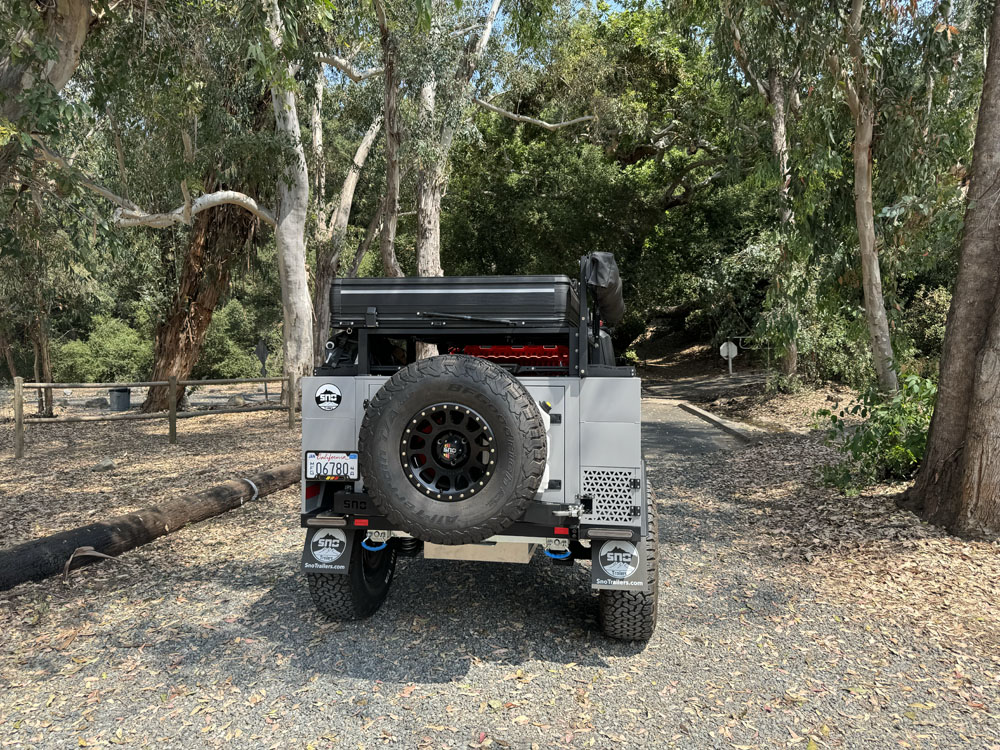
Suspension and ground clearance might not be the flashiest trailer specs—but they’re two of the most important when it comes to off-road travel. Without them, even the best-looking trailer can fall apart when the trail gets rough.
The SNO Trailers Alpine proves what’s possible when these two elements are prioritized. With smart engineering, premium components, and thoughtful design, it delivers trailer performance you can count on—even in the most challenging environments.
So if you’re planning to leave the pavement behind, remember: what’s underneath your trailer matters just as much as what’s inside it.
FAQ

What is the ideal suspension for an off-road trailer?
Independent or Timbren suspension systems are ideal. They allow each wheel to move independently, improving stability and comfort.
How much ground clearance should an off-road trailer have?
Aim for at least 15″ of clearance. More is better, especially if you plan to tackle rocky or uneven trails.
Can I upgrade my trailer’s suspension after purchase?
In many cases, yes. Some manufacturers, like SNO Trailers, even offer upgraded suspension packages like the Fabtech long-travel system.
Does trailer weight affect off-road performance?
Absolutely. Heavier trailers are harder to tow and more likely to sink in soft terrain. Lightweight trailers like the Alpine improve mobility and fuel efficiency.
What other features should I look for in an off-road trailer?
Beyond suspension and clearance, look for tough tires, good departure angles, rust-resistant materials, and off-grid power options.
A quick heads-up: If you snag something through our affiliate links or check out our sponsored content, we might earn a commission at no extra cost to you. But fear not, we’re all about recommending stuff we’re truly stoked about!